Biodiversity as we see today is the outcome of over 3.5 billion years of evolutionary history, shaped by natural processes and increasingly, by the influence of humanbeings. Biodiversity forms the web of life of which man is an integral part and upon which he fully depends. Biodiversity is not distributed uniformly across the globe. Certain countries, lying wholly or partly within the tropics, are characterized by high species richness and more number of endemic species. These countries are known as Mega diverse countries. India is one of the identified mega diverse countries of the World. With only 2.4% of the land area, and accounts for 7-8% of the recorded species of the world. Over 45,000 species of plants and 91,000 species of animals have been recorded so far. It is remarkable to note that India maintains this biodiversity while supporting 20% of the world's human and cattle population. The wide diversity in physical features and climatic situations has resulted in a diversity of ecosystems such as forests, grasslands, wetlands, coastal and marine (mangroves and coral reefs) and deserts. Among these, the forest ecosystem in particular exhibits tremendous variability ranging from temperate alpine to tropical wet evergreen forests. There are 16 major forest types in India and it is also one of the eight primary centres of the origin of cultivated plants and is rich in agricultural biodiversity. India is an acknowledged centre of crop diversity, and holds 320 wild varieties of crop relatives mainly of rice, maize, millets, barley and brinjals. About 114 breeds of domesticated animals (buffaloes, cattle, sheep, goat, camel, horses, donkeys, etc.) are also found in the country. India also has four of the 34 identified hot spots of the world, which are characterized by high degree of endemism and are therefore areas of global conservation concern. Threats to Biodiversity Extinction of species and gradual changes in ecological communities is a natural phenomenon. However, the pace of extinction has increased dramatically as a result of human activities. Ecosystems are being fragmented or eliminated, and several species are in decline. The fragmentation, degradation, and loss of habitats pose serious threat to biological diversity. It is estimated that species are disappearing at an alarmingly higher rate than the evolutionary processes and this is predicted to rise dramatically. These losses are irreversible and pose a threat to our own well being, considering our dependence on food crops and medicines, and other biological resources. The loss in biodiversity impoverishes us all, and weakens the ability of the living systems on which we depend, to resist growing threats, such as climate change. Convention on Biological Diversity Global concern about loss of species and ecosystems found expression in the Convention on Biological Diversity (CBD). The CBD is, one of the two agreements adopted during the Earth Summit held in Rio de Janeiro in 1992, the other one being on UN Framework Convention on Climate Change. India is a Party to the CBD. India signed the Convention on 5th June 1992, and ratified it on 18th February, 1994. The Convention came into force on 29th December, 19993, 90 days after the 30th ratification. CBD – Important Provisions The CBD has 23 preambular paragraphs and 42 articles. The preambular paragraphs interalia recognize and reaffirm the following: • Intrinsic value of biodiversity • Biodiversity conservation as common concern of humankind • Sovereign rights of States over their biological resources • Responsibility of States to conserve and sustainably use their biodiversity • Precautionary approach towards biodiversity conservation • Vital role of local communities and women in conservation, and sustainable use of biodiversity • Need for provision of new and additional financial resources and access to technologies to developing countries to address biodiversity loss. Economic and social development and poverty eradication are the first and overriding pri0rities of developing countries. Implementation of CBD in India In India, conservation of biodiversity did not start with the CBD. India has a long history of conservation and sustainable use of natural resources, which is engrained in our ethos and is a way of life for us. This is reflected in an individual's practices as well as social systems prevalent at different times in India's history. Modern India, as the world's largest democracy is testimony to this, as environment protection is enshrined in the Constitution of India itself in Article 48 A and Article 51A (g). There are numerous and wide ranging policies, programmes and projects in place for conservation of biodiversity. National Biodiversity Action Plan In pursuance to Article 6 of the CBD, India within five years of ratifying the Convention had developed a National Policy and Macro level Action Strategy on Biodiversity in 1999. After approval of the National Environment Policy (NEP) in 2006, the 1999 document was updated and revised as the National Biodiversity Action Plan which was approved by the Cabinet in 2008. The NBAP 2008 draws upon the main principle in the NEP that human being are at the centre of concerns of sustainable development and they are entitled to a healthy and productive life in harmony with nature. Biological Diversity Act In pursuance to the Convention on Biological Diversity (CBD), India had enacted the Biological Diversity Act in 2002 following a widespread consultative process over a period of eight years. The Biological Diversity Rules were noticed thereafter in 2004. The Act gives effect to the provisions of the CBD. It also addresses access to biological resources and associated traditional knowledge to ensure equitable sharing of benefits arising out of their use to the country and its people. India is one of the first few countries to have enacted such legislation. Twenty two State Biodiversity Boards have been established till date. Similarly, setting up of BMCs by all local bodies within their areas, for the purpose of promoting conservation, sustainable use and document of biodiversity is an essential requirement under the Act. So far, 29,150 Biodiversity Management Committees (BMCs) have been set up in eight States. India at COP-10 on Biological Diversity at Nagoya More than 190 countries are negotiating at Nagoya, Japan to reach an agreement to protect the diversity of natural resources all over the world. The 12 day conference which started on 18th of this month is very important for India as it seeks a single legally binding international protocol on access and benefit sharing (ABS) under CBD.ABS will provide a mechanism to regulate and protect traditional knowledge and genetic resources. The developed countries are not in favour of this, but developing countries do. India and Brazil are leading the developing countries to ensure that ABS covers human pathogens as a bio resource. Traditionally the pharmaceutical companies from developed countries take advantage of bio-resources located in the developing countries without sharing the benefits adequately with the local people. In terms of disclosure of biodiversity, India will insists on complete transparency against graded transparency demanded by developed nations. India will also demand to link the CBD with the World Trade Agreement on the Trade related "Intellectual Property Rights (TRIPS)".
Thursday, February 10, 2011

Swift, Safe and Sure: “Project Arrow” of The India Post
An arrow, well aimed, will reach its intended destination straight, safe and sure! Similarly, the "Project Arrow", being conceptualized and implemented by the Department of Posts, under the Ministry of Telecommunications, aims to make postal services sharp, straight and sure. The project will see to it that the customers will directly feel the difference in the quality of postal services. Ariyaloor was the first post office in Tamilnadu to have implemented "Project Arrow". It was inaugurated in August 2008 by Shri D Raja, Minister of State for Telecommunications. Project Arrow is an attempt at the integrated modernization of postal services. It aims at modernizing the look, feel and efficiency of the services rendered by the post office. The project also aims at making the services of the postal department as straight, safe and sure as that of a well aimed arrow! For this purpose, the project has been divided into two sections. Under one section branding of services, use of modern information technology devices, integration of human resources and development of infrastructure is being achieved. This section basically is an attempt at improving the look and feel of the service. The second aspect of Project arrow is aimed at improving all the core areas of the postal services. Thus, the aim is to modernize and make more effective services like mail, savings bank operations, improving quantum and quality of remittances and developing a better quality of counter services and customer services. As a part of the project, most post offices including Ariyaloor, which have been included in the first phase of the project, are in the process of completing basic documentation about the post office, its service area, customers, banking particulars etc. Development of new and better infrastructures like buildings, furniture etc also comes under this section. Training of staff and development of adequate hardware are the other principal components of Project Arrow. In the initial, pilot phase of Project Arrow, fifty post offices have been selected. In the second phase 450 post offices will be covered. The final phase is intended to modernize 4500 post offices, covering all the parts of the country. The aim is to cover 4500 post offices under the project within the next two years. In the Southern Region, 33 post offices have been covered so far. Nineteen more post offices have been identified for inclusion in the project. It is also to be noted that the Project Arrow is a green initiative. The project aims to minimize the use of paper, thus help in preserving trees and green cover, by making all internal correspondence based on email alone. Another important aspect of Project Arrow is that it allows for independent assessment of the quality of the program. For this purpose, an independent rating agency is being authorized to rate the services of the Project Arrow using a five star rating formula. Best achievers under the program will be rewarded suitably and their services will be recognized. The final aim of Project arrow is to become a working model for integration of services of the post office. The project will see to it that the customer will feel the difference! (PIB Features)
Types of Forests in India
The forest is a complex ecosystem consisting mainly of trees that shield the earth and support innumerable life forms. A forest is an area, which has a very high density of trees. Trees are an important component of the environment. They clean the air, cool it on hot days, conserve heat at night, and act as excellent sound absorbers. Forests create a special environment, which, in turn, affects the kinds of animals and plants that can exist. Forests can develop wherever there is an average temperature greater than about 10° C in the warmest month and an annual rainfall in excess of about 200 mm annually, except where natural fire frequency is too high, or where the environment has been impaired by natural processes or by human activities. In any area having conditions above this range there exists an infinite variety of tree species grouped into a number of stable forest types that are determined by the specific conditions of the environment there.
Forests can be broadly classified into many types, some of the several types of forest are the Taiga type (consisting of pines, spruce, etc.) the mixed temperate forests with both coniferous and deciduous trees, the temperate forests, the sub tropical forests, the tropical forests, and the equatorial rainforests. The six major groups of forest in India are moist tropical, dry tropical, montane sub tropical, montane temperate, sub alpine, and alpine. These are subdivided into 16 major types of forests.
The scientific study of the different forest species and their relation with the environment is called forest ecology, while the managing of forests is known as forestry. Globally only two types of forests can be identified. One of them is the Natural forests, which contain only the original patterns of biodiversity. The native species occurring in established seral patterns. These formations and processes have not been impacted by humans with a frequency or intensity to change established seral patterns, and anthropogenic forests, which have been impacted by humans with a frequency or intensity to change established seral patterns. Often, they contain elements of exotic species.
Climate, soil type, topography, and elevation are the main factors that determine the type of forest. India has a diverse range of forests: from the rainforest of Kerala in the south to the alpine pastures of Ladakh in the north, from the deserts of Rajasthan in the west to the evergreen forests in the northeast. Forests are classified according to their nature and composition, the type of climate in which they thrive, and its relationship with the surrounding environment.
Forests can be classified in other different ways and to different degrees of specificity. One such way is in terms of the "biome" in which they exist combined with leaf longevity of the dominant species (whether they are evergreen or deciduous). Another distinction is whether the forests composed predominantly of coniferous (needle-leaved) trees, broadleaf trees, or mixed. There is no universally accepted or set principle to classify forests. The types of forest found in India are:
Rainforests in India
Rainforests are those forests which are characterised by high rainfall between 1750mm and 2000mm and belong to the tropical wet climate group. The temperature here rarely gets higher than 34 degrees Celsius or drops below 20 degrees Celsius; average humidity is between 77 and 88%; rainfall is often more than 100 inches a year. There is usually a brief season of less rain. Almost all rain forests lie near the equator.
Rainforests are home to two-thirds of all the living animal and plant species on the planet. It has been estimated that many hundreds of millions of new species of plants, insects and microorganisms are still undiscovered. Despite the growth of vegetation in a rainforest, the actual quality of the soil is often quite poor. Rapid bacterial decay prevents the accumulation of humus. The undergrowth in a rainforest is restricted in many areas by the lack of sunlight at ground level. This makes it possible for people and other animals to walk through the forest. Rainforests may also play a role in cooling air that passes through them. As such, rainforests are of vital importance within the global climate system. It supports a very broad array of fauna including mammals, birds, reptiles like snakes, turtles, chameleons and others of the family. More than half of the world's species of plants and animals are found in the rainforest. Insects, including brightly colored butterflies, mosquitoes, camouflaged stick insects, and huge colonies of ants make up the largest group of the rainforests.
Forests can be broadly classified into many types, some of the several types of forest are the Taiga type (consisting of pines, spruce, etc.) the mixed temperate forests with both coniferous and deciduous trees, the temperate forests, the sub tropical forests, the tropical forests, and the equatorial rainforests. The six major groups of forest in India are moist tropical, dry tropical, montane sub tropical, montane temperate, sub alpine, and alpine. These are subdivided into 16 major types of forests.
The scientific study of the different forest species and their relation with the environment is called forest ecology, while the managing of forests is known as forestry. Globally only two types of forests can be identified. One of them is the Natural forests, which contain only the original patterns of biodiversity. The native species occurring in established seral patterns. These formations and processes have not been impacted by humans with a frequency or intensity to change established seral patterns, and anthropogenic forests, which have been impacted by humans with a frequency or intensity to change established seral patterns. Often, they contain elements of exotic species.
Climate, soil type, topography, and elevation are the main factors that determine the type of forest. India has a diverse range of forests: from the rainforest of Kerala in the south to the alpine pastures of Ladakh in the north, from the deserts of Rajasthan in the west to the evergreen forests in the northeast. Forests are classified according to their nature and composition, the type of climate in which they thrive, and its relationship with the surrounding environment.
Forests can be classified in other different ways and to different degrees of specificity. One such way is in terms of the "biome" in which they exist combined with leaf longevity of the dominant species (whether they are evergreen or deciduous). Another distinction is whether the forests composed predominantly of coniferous (needle-leaved) trees, broadleaf trees, or mixed. There is no universally accepted or set principle to classify forests. The types of forest found in India are:
Rainforests in India
Rainforests are those forests which are characterised by high rainfall between 1750mm and 2000mm and belong to the tropical wet climate group. The temperature here rarely gets higher than 34 degrees Celsius or drops below 20 degrees Celsius; average humidity is between 77 and 88%; rainfall is often more than 100 inches a year. There is usually a brief season of less rain. Almost all rain forests lie near the equator.
Rainforests are home to two-thirds of all the living animal and plant species on the planet. It has been estimated that many hundreds of millions of new species of plants, insects and microorganisms are still undiscovered. Despite the growth of vegetation in a rainforest, the actual quality of the soil is often quite poor. Rapid bacterial decay prevents the accumulation of humus. The undergrowth in a rainforest is restricted in many areas by the lack of sunlight at ground level. This makes it possible for people and other animals to walk through the forest. Rainforests may also play a role in cooling air that passes through them. As such, rainforests are of vital importance within the global climate system. It supports a very broad array of fauna including mammals, birds, reptiles like snakes, turtles, chameleons and others of the family. More than half of the world's species of plants and animals are found in the rainforest. Insects, including brightly colored butterflies, mosquitoes, camouflaged stick insects, and huge colonies of ants make up the largest group of the rainforests.
Mountain Forests in India
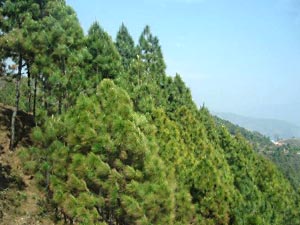
The mountain forests in India are an integral part of the country`s natural vegetation. These forests are mainly located at a high altitude in the mountains and usually vary to a great extent along the slopes of mountain. The Himalayas are the main place where these mountain forests can be found in India. The forests can be found unto a height of 1500 meters, on the foothills of the Himalayas. At this altitude, the evergreen trees like Sal, Teak, Bamboo and Cane grow abundantly and dominate the natural vegetation in mountain forests. The temperate conifer trees like Pine, Fir, Oak, Maple, Deodar, Laurel Spruce, Ceder, etc. grow in plenty on higher slope between 1,500 meters to 3,500 meters and dominate the mountain forests. The plant species like Rhododendrons and Junipers are found at the higher altitude of the Himalayas. The alpine grasslands appear up to snowfield, beyond all these vegetation belts.
The Sino-Himalayan mountain forests region forms a big portion of the mountain forests in India. The region is made up of the mid- and high-elevation forests, scrub and grasslands, which cover the southern slopes of the Himalayas and the mountains of south-west China and northern Indochina. The key habitats in these forests include the montane temperate, subtropical and sub-alpine forest, and associated grassland and scrub. The forests lie at an altitude range of 350-4,500 m. They cover the states of Jammu and Kashmir, Himachal Pradesh, Uttaranchal, West Bengal, Sikkim, Arunachal Pradesh, Assam, Meghalaya, Nagaland, Manipur, and Mizoram in India and also some portions of the other countries like China, Pakistan, Nepal; Bhutan, Myanmar, Thailand, Laos, Vietnam, etc.
 The climate in the mountain forests in India is greatly influenced by the Himalayas. The huge mountain range also exerts a major influence on monsoon and rainfall patterns in the forests. The climate conditions vary depending on elevation and location, even within the Himalayas. The climate usually ranges from subtropical in the southern foothills, with average summer temperatures of about 30° C and average winter temperatures of about 18° C. The forests in the Middle Himalayan valleys have warm temperate conditions with average summer temperatures of about 25° C and cooler winters. The forests in the higher parts of the Middle Himalayas has cool temperate conditions, where average summer temperatures are 15 to 18° C and winters are below freezing. The summers are cool and winters are severe in the forests to a cold alpine climate at even higher elevations. The climate is too cold with below freezing temperatures at elevations above 4880 m and the area is permanently covered with snow and ice. The forests located in the eastern part of the Himalayas, usually receive heavy rainfall, while the western part is drier.
The mountain forests in India are home to a rich variety of flora and fauna and a total of 28 threatened species are confined (as breeding birds) to this region. Out of these, six species are relatively widespread in distribution. The rest of 22 inhabit one of the region`s six Endemic Bird Areas like the Western Himalayas, Eastern Himalayas, Shanxi Mountains, Central Sichuan Mountains, West Sichuan Mountains and Yunnan Mountains. All these 28 species are considered as Vulnerable and the species named White-Browed Nuthatch is considered as Endangered. Apart from these, the Himalayan Quail that has not been seen for over a century and may be extinct is considered as Critically Endangered.
 The natural vegetation in the mountain forests in India is highly influenced by climate and elevation. In the Middle Himalayas at elevations between 1520 and 3660 m, the natural vegetation consists of several species of Pine, Oak, Rhododendron, Poplar, Walnut, and Larch. The forests located below the timber line contain valuable species like Spruce, Fir, Cypress, Juniper, and Birch. On the other hand, Alpine vegetation occupies the higher parts of the Great Himalayas, just below the snow line, and this includes the Shrubs, Rhododendrons, Mosses, Lichens, and Wildflowers like Blue Poppies and Edelweiss.
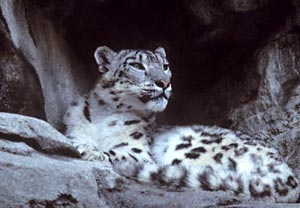
The mountain forests in India once used to provide natural habitat to a large number of animal species like Tigers, Leopards, Rhinoceroses, and many varieties of Deer. However, most of these species are extinct to this region mainly because of deforestation. These important animal species have been restricted to special protected areas like the Jaldapara and Kaziranga sanctuaries in India, at present. The forests located in the Middle Himalayas provide habitat to only a few animal species, as most of the species have been destroyed for deforestation. In the forests located in Great Himalayas, the animal species like Musk Deer, Wild Goats, Sheep, Wolves, and Snow Leopards are most commonly found. All the mountain forests in India are playing an all important role in the fresh water cycle of the country.
The Sino-Himalayan mountain forests region forms a big portion of the mountain forests in India. The region is made up of the mid- and high-elevation forests, scrub and grasslands, which cover the southern slopes of the Himalayas and the mountains of south-west China and northern Indochina. The key habitats in these forests include the montane temperate, subtropical and sub-alpine forest, and associated grassland and scrub. The forests lie at an altitude range of 350-4,500 m. They cover the states of Jammu and Kashmir, Himachal Pradesh, Uttaranchal, West Bengal, Sikkim, Arunachal Pradesh, Assam, Meghalaya, Nagaland, Manipur, and Mizoram in India and also some portions of the other countries like China, Pakistan, Nepal; Bhutan, Myanmar, Thailand, Laos, Vietnam, etc.
The climate in the mountain forests in India is greatly influenced by the Himalayas. The huge mountain range also exerts a major influence on monsoon and rainfall patterns in the forests. The climate conditions vary depending on elevation and location, even within the Himalayas. The climate usually ranges from subtropical in the southern foothills, with average summer temperatures of about 30° C and average winter temperatures of about 18° C. The forests in the Middle Himalayan valleys have warm temperate conditions with average summer temperatures of about 25° C and cooler winters. The forests in the higher parts of the Middle Himalayas has cool temperate conditions, where average summer temperatures are 15 to 18° C and winters are below freezing. The summers are cool and winters are severe in the forests to a cold alpine climate at even higher elevations. The climate is too cold with below freezing temperatures at elevations above 4880 m and the area is permanently covered with snow and ice. The forests located in the eastern part of the Himalayas, usually receive heavy rainfall, while the western part is drier. The mountain forests in India are home to a rich variety of flora and fauna and a total of 28 threatened species are confined (as breeding birds) to this region. Out of these, six species are relatively widespread in distribution. The rest of 22 inhabit one of the region`s six Endemic Bird Areas like the Western Himalayas, Eastern Himalayas, Shanxi Mountains, Central Sichuan Mountains, West Sichuan Mountains and Yunnan Mountains. All these 28 species are considered as Vulnerable and the species named White-Browed Nuthatch is considered as Endangered. Apart from these, the Himalayan Quail that has not been seen for over a century and may be extinct is considered as Critically Endangered.
The natural vegetation in the mountain forests in India is highly influenced by climate and elevation. In the Middle Himalayas at elevations between 1520 and 3660 m, the natural vegetation consists of several species of Pine, Oak, Rhododendron, Poplar, Walnut, and Larch. The forests located below the timber line contain valuable species like Spruce, Fir, Cypress, Juniper, and Birch. On the other hand, Alpine vegetation occupies the higher parts of the Great Himalayas, just below the snow line, and this includes the Shrubs, Rhododendrons, Mosses, Lichens, and Wildflowers like Blue Poppies and Edelweiss. The mountain forests in India once used to provide natural habitat to a large number of animal species like Tigers, Leopards, Rhinoceroses, and many varieties of Deer. However, most of these species are extinct to this region mainly because of deforestation. These important animal species have been restricted to special protected areas like the Jaldapara and Kaziranga sanctuaries in India, at present. The forests located in the Middle Himalayas provide habitat to only a few animal species, as most of the species have been destroyed for deforestation. In the forests located in Great Himalayas, the animal species like Musk Deer, Wild Goats, Sheep, Wolves, and Snow Leopards are most commonly found. All the mountain forests in India are playing an all important role in the fresh water cycle of the country.
30 Satellites To Be Launched In Next Decade
Ambition
- The Department of Space plans to launch “not less than 30 satellites” in the next decade.
- These include a series of resourcesat, cartosat, ocean and atmospheric satellites
- V. Jayaraman, Director, National Remote Sensing Centre (NRSC)
- The Hyderabad-based NRSC, which comes under the Department of Space.
- NRSC acquires, processes and disseminates remote sensing data for applications and disaster management.
- Resourcesat-2 in January-end or early February. It will be a replacement satellite for Resourcesat-1, which will gives 5.8 metres, 70 km multi-spectral data for the first time.
- An “integrated multi-mission ground segment” would be set up in Hyderabad.
- At present, the NRSC needed four to five days to deliver space products.
Green Plus Growth, Please
- A riled coal ministry wants a Union cabinet go-ahead for 203 coal blocks denied permission to run for falling in areas designated as "no-go" for mining by the ministry of environment and forests (MoEF).
- "Go" and "no-go" zones as demarcated by the Jairam Ramesh-led MoEF signify, respectively, forest regions allowing mining and other more ecologically sensitive zones where it's a strict no-no.
- Now, the issue isn't whether or not India needs to champion green causes in a big way.
- Environment minister Jairam Ramesh's decision to impose a blanket ban on mining in 'no-go' areas is welcome.
- It makes sense to push for a complete ban in mining in 'no-go' areas, which is just 35% of the forests under purview.
- A skewed mining policy allows states vast discretionary powers in allocation of contracts, which has led to rampant illegal mining and blatant encroachments in reserved forests.
- The reluctance of many states in implementing much-touted safeguards like monitoring and compensatory afforestation is obvious.
- Cases like the illegal mining reported in Karnataka expose the hollowness of eco-friendly rhetoric by state governments.
- In that context, it's a relief that someone's there to crack the whip.
- It is unfortunate that some view Ramesh's pro-environment stance through the grid of development alone.
- Such an opposition fails to recognise the urgent need to arrest environmental degradation, which is frequently irreversible.
- If corporations indulge in unabashed loot and state governments play footsie with them, it's incumbent on the Union ministry of environment and forests to lay down a line in the sand by declaring environmentally sensitive zones to be no-go areas.
- Corporations and state governments cannot be trusted to clean up afterwards, once you let them in.
- It's all very well to talk about a golden mean, but let the message sink in first that environmental destruction must be prevented at all costs.
- And even if mining companies go into ecologically sensitive zones with the best of intentions, sometimes the damage done to the environment and bio-diversity is irreversible.
- Not to mention that burning the coal which gets mined will further pollute the air and add to the greenhouse gases that are causing the planet to warm up.
- More expensive coal will spur the search for greener energy
- It certainly does, and Ramesh's ministry is doing a good, proactive job here.
- The issue is whether, as a developing nation on a high trajectory growth path, India can afford to view environment and development as anything but mutually reinforcing categories.
- Speaking for coal-dependent sectors, the coal ministry estimates that the blocks if operating could generate an additional 1.3 lakh MW of power.
- Coal ministry feels blanket bans aren't desirable, since current statutes anyway require miners to get MoEF clearances to start rolling.
- The Planning Commission deputy chairman too has said "no-go" should be sensibly and scientifically defined.
- Flexibility is the key, which even Ramesh concedes. An area that's 'no-go' today needn't be so tomorrow, depending on future needs.
- Surely that's a sensible standpoint.
- Frequent clashes between key economic ministries - coal, power, transport, aviation or water resources - and MoEF are bad for Brand India. They suggest India can't develop without ravaging the environment, or turn ecological crusader unless at the cost of growth.
- They also distract from the real ills besetting the politically coddled mining sector. Both industry's and environmentalists' concerns need addressing.
- But if economic good and conservation goals are to be served together, surely the two sides must meet each other half way and find a golden mean.
- It can't be green-versus-growth for India. It has to be growth plus green.
Now, Generate Green Power From Your Balcony!
Design
- Looking a little like a cross between a double helix and a barber shop pole, the Greenerator design calls for a wind turbine, a half-dome shaped compartment for the generator, a controller, ultracapacitor, inverter and a solar panel attached to a balcony edge with a rail clamp and floor screws.
- Globerson's design calls for magnetic levitation to reduce the wind turbine friction, as well as flexible thin-film solar cells that would require less material than traditional solar panels.
- Apart from that perfect view, your balcony can be used for something more valuable-a personal generator that converts wind and sun to power from a balcony.
- Industrial designer Jonathan Globerson's Greenerator design could be a way to preserve the view while reducing reliance on coal, reports Discovery News.
- The Greenerator alone could power a refrigerator or a 32" flat panel TV, which strikes as being fairly impressive for such a seemingly small generator.
- So far, a 1:4 scale prototype of the Greenerator is up and running.
- According to Globerson's site, "the prototype turbine works”.
- According to his design specs, the Greenerator wouldn't be powering whole apartment, but it could reduce the annual cost of electricity by 6 percent.
- The design need streamlining to reduce vibration and noise.
- Anything metallic that's attached to the balcony should go through extensive safety testing-not just for humans, but also for wildlife.
Cancun Conference: Some Facts & Analysis
2010 United Nations Climate Change Conference
- The 2010 United Nations Climate Change Conference was held in Cancún, Mexico, from 29 November to 10 December 2010.
- The conference is officially referred to as the 16th session of the Conference of the Parties (COP 16) to the United Nations Framework Convention on Climate Change (UNFCCC) and the 6th session of the Conference of the Parties serving as the meeting of the Parties (CMP 6) to the Kyoto Protocol.
- In addition, the two permanent subsidiary bodies of the UNFCCC – the Subsidiary Body for Scientific and Technological Advice (SBSTA) and the Subsidiary Body for Implementation (SBI)– held their 33rd sessions.
- The 2009 United Nations Climate Change Conference extended the mandates of the two temporary subsidiary bodies, the Ad Hoc Working Group on Further Commitments for Annex I Parties under the Kyoto Protocol (AWG-KP) and the Ad Hoc Working Group on Long-term Cooperative Action under the Convention (AWG-LCA), and they met as well.
- Following the non-binding Copenhagen Accord put forth in 2009, international expectations for the COP16 conference were reduced.
- Four preparatory rounds of negotiations (i.e. sessions of the AWG-KP and the AWG-LCA) were held during 2010.
- The first three of these were in Bonn, Germany, from 9 to 11 April, 1 to 11 June (in conjunction with the 32nd sessions of SBSTA and SBI), and 2 to 6 August.
- The Bonn talks were reported as ending in failure.
- The fourth round of talks in Tianjin, China, made minimal progress and was marked by a clash between the US and China.
- In August 2010, Ban Ki-moon stated that he doubted whether member states would reach a new global agreement to address global warming, but after the Tianjin talks in October Christiana Figueres, executive secretary of the UN Framework Convention on Climate Change (UNFCCC), said, "This week has got us closer to a structured set of decisions that can be agreed in Cancun ... This is the greatest societal and economic transformation that the world has ever seen." Other commentators spoke of a positive spirit of negotiation and of paving the way for agreement in Cancun.
- In the lead up to COP16, the leaders of the world's most climate-change vulnerable nations met in Kiribati to attend the Tarawa Climate Change Conference (TCCC) from 9 to 10 November 2010.
- The Ambo declaration was adopted at the Tarawa Climate Change Conference on the 10th November 2010 by Australia, Brazil, China, Cuba, Fiji, Japan, Kiribati, Maldives, Marshall Islands, New Zealand, Solomon Islands and Tonga.
- The declaration calls for more and immediate action to be undertaken to address the causes and adverse impacts of climate change.
- The Ambo declaration, named after the village in Kiribati where parliament sits, was slated to be a non-legally-binding agreement between the nations to present at the larger international climate change summit, COP16.
- The outcome of the summit was an agreement, not a binding treaty, which aims to limit global warming to less than 2 degrees celsius above pre-industrial levels and calls on rich countries to reduce their greenhouse gas emissions as pledged in the Copenhagen Accord, and for developing countries to plan to reduce their emissions.
- The agreement includes a "Green Climate" fund, proposed to be worth $100 billion a year by 2020, to assist poorer countries finance emission reductions and adaptation.
- There was no agreement on how to extend the Kyoto Protocol, or how the $100 billion a year for the Green Climate Fund will be raised, or whether developing countries should have binding emissions reductions or whether rich countries would have to reduce emissions first.
- The New York Times described the agreement as being both a "major step forward" given that international negotiations had stumbled in recent years, and as being "fairly modest" as it did not require the changes that scientists say are needed to avoid dangerous climate change.
- John Vidal, writing in The Guardian, criticised the Cancun agreements for not providing leadership, for not specifying how the proposed climate fund will be financed, and for not stating that countries had to "peak" their emissions within 10 years and then rapidly reduce them for there to be any chance to avert warming.
- Also criticised were the deferral of decisions on the legal form of and level of emission reductions required.
- Reuters Environment Correspondent Alister Doyle reported that to some delegates, particularly those from vulnerable African nations and low-lying islands, the Cancun talks seemed like rearranging the deck chairs on the Titanic and the the Cancun agreements “fell woefully short of action needed”.
envirnment & science
- Bad weather brings chaos to Europe.
- US water has large amounts of likely carcinogen: Study . A US environmental group has found that drinking water in 35 American cities contains hexavalent chromium, a probable carcinogen.
- South Korea has stepped up efforts to get powerful polluting industries to accept an emissions trading scheme by saying carbon trading is just another industry and one that's good for the economy.
- Global waterways fuelling growth of greenhouse gas nitrous oxide.
- Sharp divisions have emerged over the forestry agreement at Cancunindigenous people's networks around the world and forest rights campaigners in India. Ironically, projects on Reducing Emissions from Deforestation and Forest Degradation plus (REDD-plus) face opposition in Mexico itself. which faces opposition from various
- Climate change affecting Assam tea growers. Rising temperatures are reducing yields and altering the distinctive flavour of a popular beverage.
- The ministry of environment and forests (MoEF) is planning to get down to cleaning the Ganges river in order to revive the freshwater dolphin (India’s national aquatic animal) population.
- The Gujarat forest department's initiative of involving local population by appointing 'vanprani mitra' (wildlife friends) in the last abode of Asiatic lions -- Gir Sanctuary -- has paid off as they have become an important factor in conservation of this endangered species.
- The launch of India's latest communication satellite GSAT-5P though GSLV-FO6, failed. GSAT-5P, GSLV-F06 were not insured.
- The Department of Space plans to launch “not less than 30 satellites” in the next decade.
- First amphibian seaplane ‘Cessna 208A' service launched in Mumbai.
- Vehicles to monitor nuclear, biological and chemical contamination developed by the DRDO were handed over to Army.
India &world review
TAPI gas pipeline project poised for breakthrough
• The long-awaited Turkmenistan-Afghanistan-Pakistan- India (TAPI) gas pipeline project is
heading for a breakthrough during a proposed four nation summit at Ashgabat in Turkmenistan.
• The 1,640 km Asian Development Bank-backed pipeline will draw gas from Turkmenistan's
Daulatabad gas field. Once inside Afghanistan, it will run alongside the Herat-Kandahar
Highway before heading towards Multan in Pakistan via Quetta. The pipeline will terminate in
India at Fazilka in Punjab.
Sarkozy calls for permanent Security Council seat for India
• During his first stopover on his four-day visit to India, French President Nicolas Sarkozy called
for a permanent seat for India in the U.N. Security Council.
• The UNSC must be expanded to include new permanent members — India, Brazil, Germany
and Japan — and it must have representation from Africa and the Middle-East, he said, adding
India should join the Security Council as a permanent member so that it could assume its full
role in the G20.
• Nuclear energy would be the “focus” of Indo-French cooperation, he said, lauding the
“considerable environmental benefit” and “energy independence” that it brought. As much as 80
per cent of France's electricity came from the nuclear source.
• India's decision to expand its nuclear energy production from 4,000 to 62,000 megawatts in 20
years represented a “change of attitude.” With the completion of the nuclear power project at
Jaitapur, to be built in collaboration with the French company Areva, the six Indo-French EPR
plants would provide 10,000 megawatts, said Mr. Sarkozy.
India, France to sign pact on two nuclear reactors
• The final negotiating obstacles having been crossed, India and France will sign a framework
agreement for the construction of two 1,650-MWe French nuclear reactors at Jaitapur in
Maharashtra.
• The agreement between the Nuclear Power Corporation of India Ltd. (NPCIL) and the French
nuclear vendor, Areva, will be in the presence of Prime Minister Manmohan Singh and French
President Nicolas Sarkozy.
Russia's concern over liability law may delay new Kudankulam
• The long-awaited Turkmenistan-Afghanistan-Pakistan- India (TAPI) gas pipeline project is
heading for a breakthrough during a proposed four nation summit at Ashgabat in Turkmenistan.
• The 1,640 km Asian Development Bank-backed pipeline will draw gas from Turkmenistan's
Daulatabad gas field. Once inside Afghanistan, it will run alongside the Herat-Kandahar
Highway before heading towards Multan in Pakistan via Quetta. The pipeline will terminate in
India at Fazilka in Punjab.
Sarkozy calls for permanent Security Council seat for India
• During his first stopover on his four-day visit to India, French President Nicolas Sarkozy called
for a permanent seat for India in the U.N. Security Council.
• The UNSC must be expanded to include new permanent members — India, Brazil, Germany
and Japan — and it must have representation from Africa and the Middle-East, he said, adding
India should join the Security Council as a permanent member so that it could assume its full
role in the G20.
• Nuclear energy would be the “focus” of Indo-French cooperation, he said, lauding the
“considerable environmental benefit” and “energy independence” that it brought. As much as 80
per cent of France's electricity came from the nuclear source.
• India's decision to expand its nuclear energy production from 4,000 to 62,000 megawatts in 20
years represented a “change of attitude.” With the completion of the nuclear power project at
Jaitapur, to be built in collaboration with the French company Areva, the six Indo-French EPR
plants would provide 10,000 megawatts, said Mr. Sarkozy.
India, France to sign pact on two nuclear reactors
• The final negotiating obstacles having been crossed, India and France will sign a framework
agreement for the construction of two 1,650-MWe French nuclear reactors at Jaitapur in
Maharashtra.
• The agreement between the Nuclear Power Corporation of India Ltd. (NPCIL) and the French
nuclear vendor, Areva, will be in the presence of Prime Minister Manmohan Singh and French
President Nicolas Sarkozy.
Russia's concern over liability law may delay new Kudankulam
TIPS FOR UPSC INTERVIEWS
Many of us are theoretically excellent, but fail to get past in the oral rounds. This is not because we lack the desired charisma, but we do not know the exact approach. So, hey guys, just relax & just remember these easy tips and face the interviews confidently!!UPSCPORTAL.COM
UPSCPORTAL.COM
In the past twenty years of my professional life, I have come across people from all walks of life.Amongst these, those who have been successful,all have some similar traits which have made them achieve great heights.To put these into practice, I have devised an easy method to remember the Tips!!!UPSCPORTAL.COM
UPSCPORTAL.COM
----------------------------------------------------------------
Three "U"s, Three "P"s, Two "S", Two "C"s:
----------------------------------------------------------------
Understand
Use
Update
-----------------------------------------------
Prepararation
Pleasing Personality
Provide
Positive Approach
-----------------------------------------------
Smile
Straighi from the Heart
-----------------------------------------------
Confidence
Consistency with Clarity
-----------------------------------------------
UPSCPORTAL.COM
In the past twenty years of my professional life, I have come across people from all walks of life.Amongst these, those who have been successful,all have some similar traits which have made them achieve great heights.To put these into practice, I have devised an easy method to remember the Tips!!!UPSCPORTAL.COM
UPSCPORTAL.COM
----------------------------------------------------------------
Three "U"s, Three "P"s, Two "S", Two "C"s:
----------------------------------------------------------------
Understand
Use
Update
-----------------------------------------------
Prepararation
Pleasing Personality
Provide
Positive Approach
-----------------------------------------------
Smile
Straighi from the Heart
-----------------------------------------------
Confidence
Consistency with Clarity
-----------------------------------------------
UPSCPORTAL.COM
UNDERSTAND the scenario thoroughly as soon as you walk into the interview.Observe each one on the other side subtly and acknowledge them gracefully. You need not bend your back trying to please them,just be as close to your real self as possible.
USE your plus points effectively while trying not to give out your minus.By this ,I mean, if you are good at conversation,then go ahead and converse. But if you bungle things normally while talking, try to answer to the point.
UPDATE yourself thoroughly with Current Affairs and the country's political scenario. This may help you in starting a discussion about problems facing the country, especially something close to your heart.UPSCPORTAL.COM
UPSCPORTAL.COM
PLEASING PERSONALITY- Everyone can always approach a person it he does not have a wall built around himself.Thus having a cheerful & approachable manner can instantly build a rapport with the other side and they can remember you amongst hundreds of aspirants.
UPSCPORTAL.COM
UPSCPORTAL.COM
PROVIDE a true picture of yourself instead of making tall claims of your achievements.Remember, you have already cleared the exam & that itself is proof enough. So do not bore them by boasting too much about how effective an officer you will be.Send across a signal of co-operation & willingness to learn.
UPSCPORTAL.COM
POSITIVE APPROACH can go a long way in an oral interview.When you are positive,even the most cynical interviewer can begin to get positive vibes.I know, it is a bit difficult, but then in all your life, even in future this may help in solving many a problems.
SMILE- They say, " A Smile can take you Miles". That holds good here too.As soon as they see your smiling face, they know you have come willingly & earnestly for this post. It also infuses a bit of Patriotism to your Personality automatically.
UPSCPORTAL.COMUPSCPORTAL.COM
STRAIGHT FROM THE HEART- This is a very important aspect of a UPSC interview. Mainly you shall be tested for your honesty, integrity & leadership qualities. So whatever you say, should be what you truly believe in & heartfelt.Analyse rationally, and put forth your point of view in as few words as possible. Do not give long lectures.It may work against you.
UPSCPORTAL.COM
CONFIDENCE is what you should possess all throughout the interview. Whatever you answer, be confident, Do not criticise the current leaders and confidently say that you can do a better job than them, then it backfires. Otherwise maintain the air of confidence, so that they know you are capable of leading a sector with a managerial quality.
UPSCPORTAL.COM
CONSISTENCY WITH CLARITY- You need to be consistent in whatever you say. If you keep changing your opinions all along, you shall be categorized as trying to pull the wool over their eyes. Hence be Clear & Consistent in your approach to a situation.Communication too should be very clear in words as well as diction.
UPSCPORTAL.COMUPSCPORTAL.COM
Well, guys, what are you waiting for? See which areas you are strong & which areas you need to improve yourself. Just work towards it slowly & steadily, & I am sure we shall see some of you guys heading some important portfolios!! Al the Best to each one of you!!
UNDERSTAND the scenario thoroughly as soon as you walk into the interview.Observe each one on the other side subtly and acknowledge them gracefully. You need not bend your back trying to please them,just be as close to your real self as possible.
USE your plus points effectively while trying not to give out your minus.By this ,I mean, if you are good at conversation,then go ahead and converse. But if you bungle things normally while talking, try to answer to the point.
UPDATE yourself thoroughly with Current Affairs and the country's political scenario. This may help you in starting a discussion about problems facing the country, especially something close to your heart.UPSCPORTAL.COM
UPSCPORTAL.COM
PLEASING PERSONALITY- Everyone can always approach a person it he does not have a wall built around himself.Thus having a cheerful & approachable manner can instantly build a rapport with the other side and they can remember you amongst hundreds of aspirants.
UPSCPORTAL.COM
UPSCPORTAL.COM
PROVIDE a true picture of yourself instead of making tall claims of your achievements.Remember, you have already cleared the exam & that itself is proof enough. So do not bore them by boasting too much about how effective an officer you will be.Send across a signal of co-operation & willingness to learn.
UPSCPORTAL.COM
POSITIVE APPROACH can go a long way in an oral interview.When you are positive,even the most cynical interviewer can begin to get positive vibes.I know, it is a bit difficult, but then in all your life, even in future this may help in solving many a problems.
SMILE- They say, " A Smile can take you Miles". That holds good here too.As soon as they see your smiling face, they know you have come willingly & earnestly for this post. It also infuses a bit of Patriotism to your Personality automatically.
UPSCPORTAL.COMUPSCPORTAL.COM
STRAIGHT FROM THE HEART- This is a very important aspect of a UPSC interview. Mainly you shall be tested for your honesty, integrity & leadership qualities. So whatever you say, should be what you truly believe in & heartfelt.Analyse rationally, and put forth your point of view in as few words as possible. Do not give long lectures.It may work against you.
UPSCPORTAL.COM
CONFIDENCE is what you should possess all throughout the interview. Whatever you answer, be confident, Do not criticise the current leaders and confidently say that you can do a better job than them, then it backfires. Otherwise maintain the air of confidence, so that they know you are capable of leading a sector with a managerial quality.
UPSCPORTAL.COM
CONSISTENCY WITH CLARITY- You need to be consistent in whatever you say. If you keep changing your opinions all along, you shall be categorized as trying to pull the wool over their eyes. Hence be Clear & Consistent in your approach to a situation.Communication too should be very clear in words as well as diction.
UPSCPORTAL.COMUPSCPORTAL.COM
Well, guys, what are you waiting for? See which areas you are strong & which areas you need to improve yourself. Just work towards it slowly & steadily, & I am sure we shall see some of you guys heading some important portfolios!! Al the Best to each one of you!!
Plan And Strategy For Indian Engineering Services
Any one can never make a comparison of Government Service with anything. Where ever the question about Indian Engineering Services, actually these have very high position. Here, you play a role in a making a plan and executing it not for money, for any person but your beloved country and their people. No matter how much you get in private sector. So in this way, you can play very important role in India’s development and making its future bright.
Like Civil Servants in India, the Engineers recruited through Indian Engineering Services get very high honors in government and society. At present government is spending more than 15 percent of India's GDP in Engineering. Given the extent of tasks and functions managed by the public sector this extends to a fairly broad segment of the economy covering the Railroads, Military, Public works, Power, Telecommunications, etc. Copyright © 2009 WWW.UPSCPORTAL.COM
Government of India recruits its coveted Engineers through competitive exams held each year by Union Public Service Commission. For this, a combined competitive examination is conducted by the UPSC.
The test is conducted in June every year at centres across India, namely: Agartala, Ahmedabad, Aizwal, Allahabad, Bangalore, Bareilly, Bhopal, Chandigarh, Chennai, Cuttack, Delhi, Dharwar, Dispur (Guwahati), Gangtok, Hyderabad, Imphal, Itanagar, Jaipur, Jammu, Jorhat, Kochi, Kohima, Kolkata, Lucknow, Madurai, Mumbai, Nagpur, Panaji (Goa), Patna, Port Blair, Raipur, Sambalpur, Shillong, Simla, Srinagar,
Thiruvananthapuram, Tirupati, Udaipur,Ranchi
(Jharkhand) and Vishakapatnam.
There are two parts of Indian Engineering Services written exam, Objective Papers of 600 marks and Conventional Papers of 400 marks ie total 1000 marks.
Beside it there is personality test of 200 marks. IES exam total carries 1200 marks. Objective Papers consist of three papers each carrying 200 marks of two hour duration. Here first paper is of General Ability Test divided in two parts-General English and General Studies and last two papers are from your chosen Engineering subjects. Copyright © 2009 WWW.UPSCPORTAL.COM
Part two of exam is consist of two Conventional Papers of each 200 marks are from Engineering subjects. Here I am telling about General Studies, which is very important, because without qualifying in this paper, your other papers will not be evaluated and your all efforts will go in waste. So be careful and prepare this paper systematically. I am giving details about this paper and related study materials. Copyright © 2009 WWW.UPSCPORTAL.COM
General Ability Test:
UPSC has divided General Ability Test in two parts- Part A is General English and Part B is General Studies. Test of both subjects held in one session of two hours and carries 200 marks. General Ability Test is part of Objective Papers. Copyright © 2009 WWW.UPSCPORTAL.COM
The Objective Type papers, which carries 600 marks are very important, because these are evaluated first and evaluation of the Conventional Type papers contained in Section-II of the Plan of Examination will be done only of those candidates who obtain the minimum qualifying marks in Objective types papers, as fixed by the Commission. So candidate must give importance to General Ability Test. They have often face difficulties in this paper, because their background is very much different. I think a good strategy is important for this.
Like Civil Servants in India, the Engineers recruited through Indian Engineering Services get very high honors in government and society. At present government is spending more than 15 percent of India's GDP in Engineering. Given the extent of tasks and functions managed by the public sector this extends to a fairly broad segment of the economy covering the Railroads, Military, Public works, Power, Telecommunications, etc. Copyright © 2009 WWW.UPSCPORTAL.COM
Government of India recruits its coveted Engineers through competitive exams held each year by Union Public Service Commission. For this, a combined competitive examination is conducted by the UPSC.
The test is conducted in June every year at centres across India, namely: Agartala, Ahmedabad, Aizwal, Allahabad, Bangalore, Bareilly, Bhopal, Chandigarh, Chennai, Cuttack, Delhi, Dharwar, Dispur (Guwahati), Gangtok, Hyderabad, Imphal, Itanagar, Jaipur, Jammu, Jorhat, Kochi, Kohima, Kolkata, Lucknow, Madurai, Mumbai, Nagpur, Panaji (Goa), Patna, Port Blair, Raipur, Sambalpur, Shillong, Simla, Srinagar,
Thiruvananthapuram, Tirupati, Udaipur,Ranchi
(Jharkhand) and Vishakapatnam.
There are two parts of Indian Engineering Services written exam, Objective Papers of 600 marks and Conventional Papers of 400 marks ie total 1000 marks.
Beside it there is personality test of 200 marks. IES exam total carries 1200 marks. Objective Papers consist of three papers each carrying 200 marks of two hour duration. Here first paper is of General Ability Test divided in two parts-General English and General Studies and last two papers are from your chosen Engineering subjects. Copyright © 2009 WWW.UPSCPORTAL.COM
Part two of exam is consist of two Conventional Papers of each 200 marks are from Engineering subjects. Here I am telling about General Studies, which is very important, because without qualifying in this paper, your other papers will not be evaluated and your all efforts will go in waste. So be careful and prepare this paper systematically. I am giving details about this paper and related study materials. Copyright © 2009 WWW.UPSCPORTAL.COM
General Ability Test:
UPSC has divided General Ability Test in two parts- Part A is General English and Part B is General Studies. Test of both subjects held in one session of two hours and carries 200 marks. General Ability Test is part of Objective Papers. Copyright © 2009 WWW.UPSCPORTAL.COM
The Objective Type papers, which carries 600 marks are very important, because these are evaluated first and evaluation of the Conventional Type papers contained in Section-II of the Plan of Examination will be done only of those candidates who obtain the minimum qualifying marks in Objective types papers, as fixed by the Commission. So candidate must give importance to General Ability Test. They have often face difficulties in this paper, because their background is very much different. I think a good strategy is important for this.
| UNDERSTANDING GENERAL ABILITY |
|---|
| About General English: The question paper in General English will be designed to test the candidate’s understanding of English and workmanlike use of words. Copyright © 2009 WWW.UPSCPORTAL.COM About General Studies: The paper in General Studies will include knowledge of current events and of such matters as of everyday observation and experience in their scientific aspects as may be expected of an educated person. The paper will also include questions on History of India and Geography of a nature which candidates should be able to answer without special study.Copyright © 2009 WWW.UPSCPORTAL.COM |
Instructions And Details of UPSC About IES
The examination shall be conducted according to the following plan: Part I of IES Examination Written examination will comprise two sections:-Section I consisting only of objective types of questions and Section II of conventional papers. Both Sections will cover the entire syllabus of the relevant engineering disciplines viz. Civil Engineering, Mechanical Engineering, Electrical Engineering and Electronics & Telecommunication Engineering. The standard and syllabi prescribed for these papers are given in Schedule to the Appendix. Copyright © 2009 WWW.UPSCPORTAL.COM
The details of the written examination i.e. subject, duration and maximum marks allotted to each subject are given below:
| Category | Section | Subject | Duration | Maximum Marks |
|---|---|---|---|---|
| I-CIVIL ENGINEERING | I-Objective Papers | General Ability Test (Part A: General English)(Part B: General Studies) | 2 Hrs | 200 |
| Civil Engineering Paper I | 2Hrs | 200 | ||
| Civil Engineering Paper II | 2Hrs | 200 | ||
| II-Conventional Papers | Civil Engineering Paper I | 3Hrs | 200 | |
| Civil Engineering Paper II | 3Hrs | 200 | ||
| Total Copyright © 2009 WWW.UPSCPORTAL.COM | 1000 | |||
| I-Mechanical ENGINEERING | I-Objective Papers | General Ability Test (Part A: General English)(Part B: General Studies) | 2 Hrs | 200 |
| Mechanical Engineering Paper I | 2Hrs | 200 | ||
| Mechanical Engineering Paper II | 2Hrs | 200 | ||
| II-Conventional Papers | Mechanical Engineering Paper I | 3Hrs | 200 | |
| Mechanical Engineering Paper II | 3Hrs | 200 | ||
| Total Copyright © 2009 WWW.UPSCPORTAL.COM | 1000 | |||
| III-Electrical ENGINEERING | I-Objective Papers | General Ability Test (Part A: General English)(Part B: General Studies) | 2 Hrs | 200 |
| Electrical Engineering Paper I | 2Hrs | 200 | ||
| Electrical Engineering Paper II | 2Hrs | 200 | ||
| II-Conventional Papers | Electrical Engineering Paper I | 3Hrs | 200 | |
| Electrical Engineering Paper II | 3Hrs | 200 | ||
| Total Copyright © 2009 WWW.UPSCPORTAL.COM | 1000 | |||
| IV-Electronics & Telecommunication ENGINEERING | I-Objective Papers | General Ability Test (Part A: General English)(Part B: General Studies) | 2 Hrs | 200 |
| Electronics & Telecommunication Engineering Paper I | 2Hrs | 200 | ||
| Electronics & Telecommunication Engineering Paper II | 2Hrs | 200 | ||
| II-Conventional Papers | Electronics & Telecommunication Engineering Paper I | 3Hrs | 200 | |
| Electronics & Telecommunication Engineering Paper II | 3Hrs | 200 | ||
| Total | 1000 | |||
Civil Services (Main) Examination-2011 Winning Strategy
Civil Services in India provide not only jobs for earning and surviving, but a power seat; from where, one can change the world. Yes, here you can change the face of country, you can eradicate poverty and problems, and you can change society. In this service you execute decisions and also participate in decision making and contribute in making law. After being successful at this exam, your fate is changed and the same time you can change others fate. So ready to face one of the toughest hurdle and if you cross it, you are the king.
To become a king, you should have a winning strategy, doing hard work systematically and good guidance. Here, through this article, I am trying to make easy the toughest examination. Preliminary examination is only gateway of mains, nothing more, but main exam is a real test and here each mark not only decide your success but also your ranking. A good ranking means the more chance for you to get your dream job. This article is useful for those, who are going to appear at main this year and it also guides them, who are making plan to appear in coming year.
Ten Success Mantras
Self-Confidence:
Robert Collier says ‘Your chances of success in any undertaking can always be measured by your belief in yourself.’ Yes self confidence plays most important role in success of a person. A difficult and lengthy process of Civil Services exam demands self-confidence because only this can keep you on the right track during the long preparation and examination. Many candidates, who are hard working and intelligent and have taken right decision, right optional, chosen right study materials but ultimately they could not succeed, because of their lack in self- confidence. Due to lack of self-confidence some time they see wrong in choosing options, some time books, some time timing and some time in their-self. So after deciding, be determined and go forward till the process is not completed. Remember, self confidence does not mean over-confidence, so be clear and ready to accept any negative side. Self-confidence is about balance.
Low self-confidence and over-confident are two extremes. If one is under-confident, he’ll avoid taking risks and stretching himself; and he might not try at all. And if he is over-confident, he may take on too much risk, stretch himself beyond his capabilities, and crash badly. Getting this right is a matter of having the right amount of confidence, founded in reality. With the right amount of self-confidence, one will take informed risks, stretch oneself and try hard.
Time Management:
Last but not least, time management is very important to achieve success. It plays very important role in preparation. For this you should divide your study plan in parts. Set a goal to complete one or some parts in given time. If you complete a part in given time you will not feel overburdened and this mental freedom will provide you more understanding and grasping capacity. So make a plan according to your need and convenient rather than following others path.
Clarity:
Candidate must have a clear approach during the preparation and examination. If you have clarity, you will easily overcome of many problems. One should be clear about optionals, study materials, concept, thought, facts and at every step. Do not stay in dilemma. After selecting optionals, materials and selection of study portion of syllabus, follow them strictly.
Go through the syllabus and past-year Q papers:
Read syllabus past year questions of GS and your two optionals carefully, specially past two years. In this way, you will understand what and how to read to tackle the questions and also important and less important part of syllabus. Follow the syllabus instead of reading whole of the book. Choose only those portions of the book which are part of your syllabus and especially you have made guess for this year examination. When ever what ever you read, frame questions on them and try to present an ideal answer. In this way you can increase understanding and expression.
A Balanced Approach:
A balanced approach is needed at every step during preparation. Give equal importance to both of optionals and compulsory papers. Do not neglect any area of syllabus. To get good marks in the exam, on should take seriously question number 1 and 5 (short notes). While preparing, one must note down, from where short notes can be asked. It will facilitate you in exam hall. In this way you can write your complete answer in within the time frame. Many of you often do not take every part of General Studies seriously.
Such step may futile, so read every portion of GS and prepare them well. In your answer, balanced view is important and at the same time one should give approximately equal time to all long answer type questions. Do not write some answer very long and some very short.
Develop Writing Skill:
Writing skills play an important role in the IAS Mains. Most of the candidates appearing for the Mains examination have a lot of knowledge, but lack writing skills. You should be able to present all the information/knowledge in a coherent and logical manner, as expected by the examiner. For example: Quoting with facts and substantiating your answer with related concepts and emphasizing your point of view. Prepare a standard answer to the question papers of the previous years. This will also make your task easy in examination hall. Do not neglect the concepts.
Sometimes the questions are ‘conceptual’ in nature, aimed at testing the comprehension levels of the basic concepts. Get a list of standard textbooks from the successful candidates, or other sources and also selective good notes. The right choice of reading material is important and crucial. . For subjects like Mathematics and Statistics and Geography maps etc, practice is very important. One should also practice other subjects and should not treat the same examination, as an “experience gathering” exercise to get a chance for writing mains is a great thing, which you may not get again.
Go through the unsolved papers of the previous papers and solve them to stimulate the atmosphere of the examination.
Try not to exceed the word limit, as far as possible. Sticking to the word limit that will save time. Besides, the numbers of marks you achieve are not going to increase even if you exceed the word limit. It’s the quality that matters not the quantity. Revision is very important. Revise after a gap. The reason is that you have been preparing for months or years together. It is a human tendency to forget something after some time. Follow paragraph writing rather than essay form. A new point should start with a new paragraph. It is easy to write and understand.. If the question needs answer in point format give it a bullet format. Try to maintain uniformity in the writing throughout the paper. Under time pressure, the script should not go from bad to worse in the later stages of the answer sheets. This may irritate the evaluator. Stick to the time frame. Speed is the very essence of this examination. Hence, time management is very crucial. For developing the writing skills, write model answers at the time of preparation. This helps get into the habit of writing under time pressure in the examination. Develop and follow your own style of writing. Try not to be repetitive and maintain a flow in the style of your writing.
To become a king, you should have a winning strategy, doing hard work systematically and good guidance. Here, through this article, I am trying to make easy the toughest examination. Preliminary examination is only gateway of mains, nothing more, but main exam is a real test and here each mark not only decide your success but also your ranking. A good ranking means the more chance for you to get your dream job. This article is useful for those, who are going to appear at main this year and it also guides them, who are making plan to appear in coming year.
Ten Success Mantras
Self-Confidence:
Robert Collier says ‘Your chances of success in any undertaking can always be measured by your belief in yourself.’ Yes self confidence plays most important role in success of a person. A difficult and lengthy process of Civil Services exam demands self-confidence because only this can keep you on the right track during the long preparation and examination. Many candidates, who are hard working and intelligent and have taken right decision, right optional, chosen right study materials but ultimately they could not succeed, because of their lack in self- confidence. Due to lack of self-confidence some time they see wrong in choosing options, some time books, some time timing and some time in their-self. So after deciding, be determined and go forward till the process is not completed. Remember, self confidence does not mean over-confidence, so be clear and ready to accept any negative side. Self-confidence is about balance.
Low self-confidence and over-confident are two extremes. If one is under-confident, he’ll avoid taking risks and stretching himself; and he might not try at all. And if he is over-confident, he may take on too much risk, stretch himself beyond his capabilities, and crash badly. Getting this right is a matter of having the right amount of confidence, founded in reality. With the right amount of self-confidence, one will take informed risks, stretch oneself and try hard.
Time Management:
Last but not least, time management is very important to achieve success. It plays very important role in preparation. For this you should divide your study plan in parts. Set a goal to complete one or some parts in given time. If you complete a part in given time you will not feel overburdened and this mental freedom will provide you more understanding and grasping capacity. So make a plan according to your need and convenient rather than following others path.
Clarity:
Candidate must have a clear approach during the preparation and examination. If you have clarity, you will easily overcome of many problems. One should be clear about optionals, study materials, concept, thought, facts and at every step. Do not stay in dilemma. After selecting optionals, materials and selection of study portion of syllabus, follow them strictly.
Go through the syllabus and past-year Q papers:
Read syllabus past year questions of GS and your two optionals carefully, specially past two years. In this way, you will understand what and how to read to tackle the questions and also important and less important part of syllabus. Follow the syllabus instead of reading whole of the book. Choose only those portions of the book which are part of your syllabus and especially you have made guess for this year examination. When ever what ever you read, frame questions on them and try to present an ideal answer. In this way you can increase understanding and expression.
A Balanced Approach:
A balanced approach is needed at every step during preparation. Give equal importance to both of optionals and compulsory papers. Do not neglect any area of syllabus. To get good marks in the exam, on should take seriously question number 1 and 5 (short notes). While preparing, one must note down, from where short notes can be asked. It will facilitate you in exam hall. In this way you can write your complete answer in within the time frame. Many of you often do not take every part of General Studies seriously.
Such step may futile, so read every portion of GS and prepare them well. In your answer, balanced view is important and at the same time one should give approximately equal time to all long answer type questions. Do not write some answer very long and some very short.
Develop Writing Skill:
Writing skills play an important role in the IAS Mains. Most of the candidates appearing for the Mains examination have a lot of knowledge, but lack writing skills. You should be able to present all the information/knowledge in a coherent and logical manner, as expected by the examiner. For example: Quoting with facts and substantiating your answer with related concepts and emphasizing your point of view. Prepare a standard answer to the question papers of the previous years. This will also make your task easy in examination hall. Do not neglect the concepts.
Sometimes the questions are ‘conceptual’ in nature, aimed at testing the comprehension levels of the basic concepts. Get a list of standard textbooks from the successful candidates, or other sources and also selective good notes. The right choice of reading material is important and crucial. . For subjects like Mathematics and Statistics and Geography maps etc, practice is very important. One should also practice other subjects and should not treat the same examination, as an “experience gathering” exercise to get a chance for writing mains is a great thing, which you may not get again.
Go through the unsolved papers of the previous papers and solve them to stimulate the atmosphere of the examination.
Try not to exceed the word limit, as far as possible. Sticking to the word limit that will save time. Besides, the numbers of marks you achieve are not going to increase even if you exceed the word limit. It’s the quality that matters not the quantity. Revision is very important. Revise after a gap. The reason is that you have been preparing for months or years together. It is a human tendency to forget something after some time. Follow paragraph writing rather than essay form. A new point should start with a new paragraph. It is easy to write and understand.. If the question needs answer in point format give it a bullet format. Try to maintain uniformity in the writing throughout the paper. Under time pressure, the script should not go from bad to worse in the later stages of the answer sheets. This may irritate the evaluator. Stick to the time frame. Speed is the very essence of this examination. Hence, time management is very crucial. For developing the writing skills, write model answers at the time of preparation. This helps get into the habit of writing under time pressure in the examination. Develop and follow your own style of writing. Try not to be repetitive and maintain a flow in the style of your writing.
IAS Papers : Method of Making Notes
There are different methods of making notes and one should decide which method suits you the best. There are two types of making notes, one is the LINEAR NOTES and the other PATTERN NOTES.
Linear Notes
Let us start with Linear notes first, it is a method in which you condense the material you have read using headings and sub headings and jotting down the most important points. This method works best when making notes from a book where the material is already properly organised. But one disadvantage of this method is that you end up copying a lot of material from the book which defeats the very purpose of condensing.
The right way to use this method is to use loose sheets of paper instead of an exercise book since it is easier to keep adding information. It is a good idea to leave space on each sheet of paper for additional information. Another way to make your notes more interesting is to use colors, block letters, making boxes and highlighting as and when necessary. All this will immediately draw our attention to the actual contents of our notes and make it more clear and comprehensible.
Pattern Notes
We now come to Pattern Notes. For this we have to begin the topic at the centre of the page. Each line radiating from it represents a branch of the main idea. Each point is written as briefly as possible using a key word or a phrase. It is a better method to adopt because it is more flexible than making Linear notes. One can add extra information to it at any point without any problem. Second advantage is that we can see the whole pattern at one go without actually turning the pages. Thirdly we can indicate the links between different topics more easily than we can do in a linear method. Another advantage of pattern notes is that it is exceptionally useful when making notes from memory for revision as you keep jotting down points as and when they occur to you. This makes it easier to revise for exams and writing out essays as only brief key words are used. Lastly, it is easier to remember as notes is made in a shape format.
Linear Notes
Let us start with Linear notes first, it is a method in which you condense the material you have read using headings and sub headings and jotting down the most important points. This method works best when making notes from a book where the material is already properly organised. But one disadvantage of this method is that you end up copying a lot of material from the book which defeats the very purpose of condensing.
The right way to use this method is to use loose sheets of paper instead of an exercise book since it is easier to keep adding information. It is a good idea to leave space on each sheet of paper for additional information. Another way to make your notes more interesting is to use colors, block letters, making boxes and highlighting as and when necessary. All this will immediately draw our attention to the actual contents of our notes and make it more clear and comprehensible.
Pattern Notes
We now come to Pattern Notes. For this we have to begin the topic at the centre of the page. Each line radiating from it represents a branch of the main idea. Each point is written as briefly as possible using a key word or a phrase. It is a better method to adopt because it is more flexible than making Linear notes. One can add extra information to it at any point without any problem. Second advantage is that we can see the whole pattern at one go without actually turning the pages. Thirdly we can indicate the links between different topics more easily than we can do in a linear method. Another advantage of pattern notes is that it is exceptionally useful when making notes from memory for revision as you keep jotting down points as and when they occur to you. This makes it easier to revise for exams and writing out essays as only brief key words are used. Lastly, it is easier to remember as notes is made in a shape format.
For the TYRO of UPSC Examination....
1st Stage: To start with ��UPSC Needs Time,Patience,support system(It could be anybody:Either parents or friends) and security(What you want to become if you didn�t get through this Exam?)
2nd Stage: So,did you cogitate over 1st stage?Now,be prepared with those 3 D�s(Dedication,Determination and Diligency).Mind you,you can cultivate them as well�
Self Motivation is the best !!
3rd Stage:
Choose the subjects which gives you pleasure and appeals you and keeps on the toes.
Forget all the Stories�It�s the student who scores not thee subject.
If you are an Engineer or from the science subject then you can choose the subject as per the pattern of the UPSC(Mains)Examination�An examiner gives you marks for what you write and not for how much years you have studied that subject��Read like a student not like a PhD. Scholar
Sounds Cogent isn�t it?
It doesnt matter whether you prepare in USA,UK,India,small city of India or even the at the villages of India�..
So,give yourself 2 years time and just hit the bull !!
This statement comes from my father who is an IPS Officer in India.Its good to share good stuffs.isnt it?
2nd Stage: So,did you cogitate over 1st stage?Now,be prepared with those 3 D�s(Dedication,Determination and Diligency).Mind you,you can cultivate them as well�
Self Motivation is the best !!
3rd Stage:
Choose the subjects which gives you pleasure and appeals you and keeps on the toes.
Forget all the Stories�It�s the student who scores not thee subject.
If you are an Engineer or from the science subject then you can choose the subject as per the pattern of the UPSC(Mains)Examination�An examiner gives you marks for what you write and not for how much years you have studied that subject��Read like a student not like a PhD. Scholar
Sounds Cogent isn�t it?
It doesnt matter whether you prepare in USA,UK,India,small city of India or even the at the villages of India�..
So,give yourself 2 years time and just hit the bull !!
This statement comes from my father who is an IPS Officer in India.Its good to share good stuffs.isnt it?
US stand on Nuke Deal with India mutates
In a measure of how the official line in Washington on India's nuclear status has changed from the Bush to the Obama administrations, the U.S. is circulating a draft U.N. Security Council resolution calling, inter alia, for all Indian nuclear facilities to be placed under international safeguards and not just those that have been declared "civilian" under the July 2005 Indo-U.S. civil nuclear agreement.
The supposed rationale for the resolution President Barack Obama would like adopted at the special UNSC session he will chair on September 24 is to demonstrate the seriousness of his stated commitment to the eventual elimination of nuclear weapons.
But there is a sting in the tail for India: For the first time since the Nuclear Non-Proliferation Treaty (NPT) entered into force, the UNSC is going to demand that all states outside the treaty sign it immediately or begin adhering to its provisions.
The only other time the UNSC has adopted such a prescriptive demand for a country or group of countries that never accepted the treaty was in 1998, when it passed resolution 1172 urging India and Pakistan to sign the NPT as well as the Comprehensive Test Ban Treaty in the wake of the nuclear tests both countries conducted in May that year.
The supposed rationale for the resolution President Barack Obama would like adopted at the special UNSC session he will chair on September 24 is to demonstrate the seriousness of his stated commitment to the eventual elimination of nuclear weapons.
But there is a sting in the tail for India: For the first time since the Nuclear Non-Proliferation Treaty (NPT) entered into force, the UNSC is going to demand that all states outside the treaty sign it immediately or begin adhering to its provisions.
The only other time the UNSC has adopted such a prescriptive demand for a country or group of countries that never accepted the treaty was in 1998, when it passed resolution 1172 urging India and Pakistan to sign the NPT as well as the Comprehensive Test Ban Treaty in the wake of the nuclear tests both countries conducted in May that year.
plan for mains exam
The competitive examination comprises two successive stages :
The Main Examination will consist of a written examination and an interview test. The written examination will consist of 9 papers of conventional essay type in the subjects set out in sub-section (B) of Section II. Also see Note (ii) under para I of Section II (B).
Candidates who obtain such minimum qualifying marks in the written part of the Main Examination as may be fixed by the Commission at their discretion, shall be summoned by them for an interview for a Personality Test vide sub-section 'C' of Section II. However, the papers on Indian Languages and English will be of qualifying nature. Also see Note (ii) under para 1 of Section II (B). The marks obtained in these papers will not be counted for ranking. The number of candidates to be summoned for interview will be about twice the number of vacancies to be filled. The interview will carry 300 marks (with no minimum qualifying marks).
Marks thus obtained by the candidates in the Main Examination (written part as well as interview) would determine their final ranking. Candidates will be allotted to the various Services keeping in view their ranks in the examination and the preferences expressed by them for the various Services and posts.
- Civil Services (Preliminary) Examination (Objective Type) for the selection of candidates for Main Examination; and
- Civil Services (Main) Examination (Written and Interview) for the selection of candidates for the various services and posts.
The Main Examination will consist of a written examination and an interview test. The written examination will consist of 9 papers of conventional essay type in the subjects set out in sub-section (B) of Section II. Also see Note (ii) under para I of Section II (B).
Candidates who obtain such minimum qualifying marks in the written part of the Main Examination as may be fixed by the Commission at their discretion, shall be summoned by them for an interview for a Personality Test vide sub-section 'C' of Section II. However, the papers on Indian Languages and English will be of qualifying nature. Also see Note (ii) under para 1 of Section II (B). The marks obtained in these papers will not be counted for ranking. The number of candidates to be summoned for interview will be about twice the number of vacancies to be filled. The interview will carry 300 marks (with no minimum qualifying marks).
Marks thus obtained by the candidates in the Main Examination (written part as well as interview) would determine their final ranking. Candidates will be allotted to the various Services keeping in view their ranks in the examination and the preferences expressed by them for the various Services and posts.
sports current affairs
- Kalmadi and Co. pocket Common man's Wealth:
The contempt letters of forgery and fraud in Commonwealth Games resulted in an abnormally affliction of our nation's picture. The bulk of finances used up on modernizing the venues for Commonwealth Games accommodate a prima facie affirmation of ample calibration enticement in the alignment of Commonwealth Games. The abstracts accessible on the Commonwealth Games website reveals that the amount of refurbishing the JNU stadium was USD 215 million; the IGI Stadium USD 150 million; the Hockey stadium (named after Dhyan Chand) USD 60 million; and the Shooting Alleys USD 35 million. An absolute sum of USD 10150 million was spent on renovations. The costs incurred in the advance of the lone cricket stadium in Delhi were USD 20 million. For the LBS stadium in Hyderabad was USD 18 million, and architecture of a contemporary and technology studded stadium in the city of oranges amounted USD 19 million. It is acute that the Central Government anon adjustment a top akin analysis into this arrangement and the dealings embarked on. It is abominable that such all-embracing abusage of communal resources has taken abode in the name of the Commonwealth Games. The accusations of inducement ambit from favoritism in accolade of affairs to big-ticket appoint of accessories for training and abrupt accretion in the costs of architecture treaties. - Bridge Collapses; Casualties cross double figures:
Reportedly not less than 27 people were afflicted afterwards an under-construction foot over bridge burst within the close proximity of the Jawaharlal Nehru Stadium, the capital area of the Commonwealth Games, bidding the Organizing Committee (OC) to awning up by giving a statement or in other words a false sense of complacency and assurance that everything is being taken care of. The arch was to hotlink the amphitheater to parking for delegates and athletes. The Urban Development Minister, Jaipal Reddy has dismissed the pressures by quoting it is a negligible incident. The Public Works Department (PWD) has urged for an acoount of the structure from the builders. Later the aforementioned day, Organizing Committee Secretary General Lalit Bhanot addressed reporters: "We will put up a great show. He said the venues will be all set in the days to come and there would be added sprucing to accommodate top notch standards. However, the mishap is a concern to the CWG organizers, who are already nabbed amidst accuse of laziness and fraud for the XIX Edition. Previously, Mike Hooper, the main controller of the Commonwealth Games Federation (CGF), remarked on the condition of hygiene at the Games Village as "dirty." - Chennai are the Super Kings of Twenty20 Cricket:
The Mahendra Singh Dhoni led Chennai Super Kings are the champions of the second edition of the AirTel Champions League Twenty20 hosted by South Africa from September 10th to September 26th. Chennai Super Kings defeated their fellow finalists in some fashion by 8 wickets in the final of the Champions League T20 2010.Warriors had won the toss earlier and decided to bat first but bootless to account an appropriate target, but only capable to set a minimal total of mere 128 runs for 7 wickets. Only Davy Jacobs's denticulate 34 runs were the notable contribution and was also the best from the entire batting lineup of the Warriors. Muttiah Muralidaran was the most booming bowler scalping 3 wickets for only 16 runs. Ashwin got a couple of wickets for 16 runs as well. Chennai Super Kings started off in some style by baking batting by Murali Vijay who denticulate a 58 run total. Michael Hussey fabricated 42 handy runs to the total. The Opening brace fabricated 103 runs which fabricated their way of triumph easier than it ever seemed. With this Murali Vijay became the highest run getter of the second edition of the Champions League Twenty20. He was facilitated with the Man of the Match Award. With such great triumph on the world stage, the Indian and CSK captain has silenced his critics and is still in contention to be the best ever captain in the world today.
Subscribe to:
Comments (Atom)