Search This Blog

Sunday, March 13, 2011

How veggies protect against cancer

A new research by scientists from the University of Alabama at Birmingham has shown how vegetables such as broccoli and cabbage help reverse or prevent cancers and other aging-related diseases.
"Your mother always told you to eat your vegetables, and she was right,” says co-author Trygve Tollefsbol, a biology professor in the UAB College of Arts and Sciences. “But now we better understand why she was right - compounds in many of these foods suppress gene aberrations that over time cause fatal diseases.” Epigenetics is the study of the changes in human gene expressions with time, changes that can cause cancer and Alzheimer’s, among other diseases. In recent years, epigenetics research worldwide, including numerous studies conducted at UAB, have identified specific food compounds that inhibit negative epigenetic effects.
Those foods include soybeans, cauliflower, broccoli and cabbage. Green tea, fava beans, kale, grapes and the spice turmeric round out the diet.
"The epigenetics diet can be adopted easily, because the concentrations of the compounds needed for a positive effect are readily achievable,” says lead author Syed Meeran, Ph.D., a research assistant professor in Tollefsbol’s UAB Department of Biology laboratory.
"Compounds in the epigenetics diet foods can, at the very least, help us lead healthier lives and help our bodies prevent potentially debilitating diseases like breast cancer and Alzheimer’s,” Tollefsbol says.
The research review is published in the journal Clinical Epigenetics.

Giving museums a life

ramod Kumar's story should make a good movie: young man gets an MBA, leaves hometown, works in the corporate sector in Mumbai and then quits it all to pursue his passion for arts and culture, turns entrepreneur and a sought-after museologist. And so far, there have been only inspiring twists to this story.
New Delhi-based Pramod Kumar K.G. was in the city, his hometown, to participate in the World Dance Forum that brought together academics and artistes last weekend. Sitting in his home in Jawahar Nagar, Pramod goes through the various milestones in his life so far.
Managing Director of Eka Cultural Resources and Research, Pramod started out with a regular nine-to-five job in Mumbai with Apollo Hospitals, more than a decade ago. Even during the two years he spent in corporate India, Pramod read extensively on textiles, art management and culture. In fact, as he was marketing healthcare services, he was involved with a commercial art gallery project at Apollo.
The decision to quit the comfort of a secure corporate job came quite easily to Pramod who grabbed a life-changing opportunity and moved to Delhi. Working with Rajeev Sethi, the well-known scenographer and designer gave Pramod his first major break in the field of art and culture.

“I was the head of a research project for the Smithsonian Museum, Washington,” he says, chronicling the rich and significant impact the international project had on him. For Pramod, this prestigious Smithsonian project was even better than getting a degree in Museology as it gave him hands-on training and exposure to the art and culture of 22 countries.

Jaipur festival

Armed with this experience, Pramod moved to another city, painted vibrant-pink with history and culture – Jaipur. It was there that he met John and Faith Singh of the Jaipur Virasat Foundation that was waiting to meet the right person to organise the Jaipur International Heritage Festival.
Pramod went on to work with the festival and ran it for a year. “At that time, back in 2004 or so, this was the only city festival in India,” he says, underlining the experience he gained from working with the Foundation.
It was around then that Pramod and a few friends realised there was a need to promote reading and books in Jaipur. What started out as an idea for a book club became the Jaipur Literature Festival. He directed the first edition of the festival in 2005.
It was around the same time that he set up India's first museum on hand-block printing – the Anokhi Museum of Hand Printing in Jaipur. The next milestone was his work with the Alkazi Foundation in New Delhi. During his four years with the Foundation, Pramod worked with Ebrahim Alkazi to bring his entire collection of photographs to India. The Alkazi collection of photography is considered India's largest archive of 19th and early 20th century photographs.
Soon after, another challenging and prestigious project came along: to be the consultant curator of the City Palace Museum-Udaipur. It was then that Pramod realised it was time to set up his own consultancy and Eka was born.
Eka is perhaps the sole cataloguing and archiving company in India today. “We catalogue and archive collections in India and abroad, create galleries and spaces for art, curate and facilitate dialogues between museums in different parts of the world,” he explains.

The jewel of Jodhpur

Mehrangarh is sheer majesty. As I stand high above the city looking down from the Fort, the past and present seem to fuse seamlessly. Below are the painted houses of the old Brahmin quarter that make Jodhpur a blue city, in contrast to the pink of Jaipur. The Mehrangarh Fort has an allure all its own — the massive citadel reaches out to you with its mixture of history, aesthetics and legend; and, the fact the kingdom it once defended is uniquely situated at the edge of the Thar Desert. Jodhpur owed its legendary wealth to being located on the famed Silk Route — it is easy to stand here and imagine camel caravans carrying silk, spices and gems.
The Fort, whose construction was begun by Rao Jodha in the mid 15th Century, is excellently maintained, thanks to Gaj Singh, the present scion of this ancient dynasty. The floors are spic and span, and there is no trace of cobwebs on the beautifully-latticed jharokhas. There are so many of these balconies, looking like finely-crocheted lace, sculpted painstakingly from the sandstone that is unique to the historic buildings of Rajasthan.
Only in India!
The entrance to the fort brings memories of the cobbled path leading to the Tower of London. But then, only in India will you have an elephant gate! A few chambers have been converted into well-maintained museums to house the splendid possessions of this dynasty — a variety of hookahs, cradles, arms, Ragamala paintings. “This is a three-in-one — gun, sword and spear,” says our turbaned, angrakha-clad guide pointing to a deadly weapon. Another famed exhibit is Emperor Akbar's sword. The fort was witness to the changing relationship between the Mughals and the Rathore rulers — often allies and sometimes adversaries. Palanquins are in plenty as are elephant howdahs with images of bemused-looking tigers flanking the seats. “This palanquin was gifted by the Queen of England to the then maharani when she visited London.” We see an odd-shaped carriage showing an unfamiliarity with the idiom of palanquin-making.
A documentary explains how Gaj Singh managed to turn adversity into advantage after the abolition of the privy purses. He turned to tourism and helped generate revenues for Rajasthan. Also touched upon are his efforts to bring water to a water-starved area.
Climbing stairs is never more profitable than in Rajasthan. We enter glittering glass walled and painted chambers — Sheesh Mahal, Rang Mahal, Phool Mahal, Moti Mahal, Takhat Vilas… The fort and the palaces with their seven gates (pols) were built over a period of 500 years. The Zenana Deodhi, the women's quarters, is the oldest surviving part of the palace. Pointing to a tiny chamber, the guide says: “Here is where the royal births would take place; the midwife would drop a lemon to the ground below to indicate the arrival of a new royal.”
Do you want to visit the temple of Goddess Chamundi, we are asked. We nod sombrely — it was here that many people lost their lives in a stampede recently. The goddess is the tutelary deity of the Rathore rulers.
We return via the Loha Pol, which has palms carved on the walls. These commemorate the women who passed through the gate on the way to the funeral pyres of their husbands. We make our way down gloomily, and our spirits rise only when we turn back from our vehicle to see the majestic Mehrangarh outlined against the sky.

Indian infants make 25 per cent of global diarrhoea deaths

Indian infants, below the age of five, make for one-fourth of the total global deaths due to diarrhoea-related causes, experts here said on Wednesday.
“Of the 610,000 infants below the age of five years who die because of severe gastroenteritis or diarrhoea, nearly 152,000 are Indians. The disease burden of rotavirus associated diarrhoea is attributing to high child mortality rate in the country,” said Rohit Agarwal, president-elect of the Indian Association of Pediatricians at the launch of pentavalent rotavirus vaccine in the country.
RotaTeq vaccine, priced at Rs.900, is aimed to help children fight rotavirus gastroenteritis, also the cause of severe and fatal diarrhoea among infants below five years.
“India suffers from high disease burden of the rotavirus associated diarrhoea which also leads to high child mortality rate in the country. We are also in talks with the Ministry of Health and Family Welfare to introduce the vaccine in public health centres,” said K.G. Ananthakrishnan, Managing Director of MSD pharmaceuticals.
The vaccine has been approved in 98 countries of the world as per the prequalification status granted by the World Health Organisation.
Globally, rotavirus causes approximately 114 million cases of diarrhoea, while every one in 200 children below the age of five dies due to the virus in the country.
A few days of dry spell in the third week of November last year bestirred us to forage into the eastern portions of Indira Gandhi National Park in search of less known pre-historic remains.
We chose a Sunday, (November 21) for our trip to Maraiyur that is cradled in between the hill ranges of Udamalpet and Munnar of Kerala State. It was evident that there was a downpour the previous night in Udamalpet and its surrounding areas. It became more evident when we touched Kurichy Kottai village, a few kilometres from Udamalpet, on the Udamalpet-Munnar road.
As we progressed on the Munnar road, there was hope of seeing some of the pre-historic remains.
Maraiyur is located at a distance of 40 kilometres from Udamalpet. An hour-and-a-half drive from Maraiyur leads to Munnar, the home of tea and thar. The Udamalpet range and its thick flora looked greener due to the sharp showers received. This chunk of forest falls under Indira Gandhi National Park. Crossing the Tamil Nadu forest check-post, we were led into the Chinnar Games Sanctuary. Beyond it lies the Alampetti tribal centre where trekking to Thoovanam waterfalls, amidst dolmen and rock art, high on the hill. Staying in camp in log houses are arranged. Since these tourist destinations are situated on different routes, a guide fee of Rs.100 per individual is levied for each trip. We planned to visit these places on our return journey from Kovilkadavu, near Maraiyur, where we witnessed the pre-historical remains.
We drove to Maraiyur, which is five kilometres away from Alampetti. But instead of heading straight to Maraiyur, we decided to take diversion and reached Kovilkadavu, a small township on the banks of Pambar River. It is located in the valley below the Munnar road.
Dolmens of pre-historic age
Overlooking Kovilkadavu are rock outcrops where dolmens of neolithic and megalithic ages are sighted. We went up to two such rocky outcrops, one on the road–side leading to a Ramar temple and the other at the backyard of Government Higher Secondary School on the upper stretch of the road that connects Maraiyur.
Near Ramar temple, which commands the view of the surrounding hills of Munnar Range and Kovilkadavu, we could see dolmens of Pre-historic Age. They are ascribed to megalithic age dating back to 10,000 B.C. They are 70 cm in height, built with rough granite stone slabs on three sides and a cap stone placed over them to serve as a roof. The stones used were all roughly hewn.

Prevention is better than cure when it comes to chronic diseases

That prevention is better than cure was the loudest message at the World Kidney Day event at the Madras Medical College here.
While longevity had increased substantially, it did not necessarily mean good quality of life, Principal Secretary, Health, V.K. Subburaj pointed out.
A number of non-communicable diseases, including diabetes, hypertension and stroke were causing health problems for the people living longer. It is believed that there are 100 crore people across the world with hypertension, and that the figure is only set to increase. About one crore people globally developed kidney disease every year, and 10 lakh of them go for dialysis. About a lakh need kidney transplant, but only about 5,000 transplants were being done, he added.
“The main reason for this is the changed lifestyle of the people – fatty diets, lack of exercise and high cholesterol levels,” he explained. While self-discipline is essential for those who live with a chronic disease, all efforts will be wasted if the patient's family does not co-operate.
N. Gopalakrishnan, head, Nephrology department, Madras Medical College, explained the genetic predisposition south Indians showed for Diabetes Mellitus. In addition, there were diet and environment factors. With high blood pressure and blood sugar, the chances of get kidney disease would rise proportionately. Also, these factors were silent at onset and no signs or symptoms that would aid detection are present in the beginning. However, every one over 40 years must have an annual check up at least once a year to ensure that any chronic disease is picked up early and treated.
Once kidney disease sets in, treatment procedures are available, including dialysis for patients with end stage disease. A number of people would require transplantation, Dr. Gopalakrishnan added.
Tamil Nadu had evolved a system by which cadaveric organs could be used for transplant, and this had enabled a number of patients with end stage kidney disease to get a new lease of life. The waiting time for a kidney had also been cut down substantially, J.Amalorpavanathan, convenor, State Cadaver Transplant Programme, said.

Weave of glory

At a time when the Parsi-Zoroastrian community records a drastic decrease in its population with every count, what's the point of basking in its glorious past, a few cynical minds can always ask, but a balanced outlook will only appreciate the agenda behind “Parsi Panorama” a four-day festival celebrating different aspects of Parsi culture with a thrust on its textiles.
Dr. Shernaz H. Cama, Director of the UNESCO-Parzor Project, aimed at documenting different aspects of the community, tells you that the dwindling numbers are a reason to be concerned, but that can't be interpreted as a void of traditions in the community. However small it may be in numbers — the last census conducted in 2001 put the Parsi population at 64,000 in India which is dropping by 10 per cent every year — Parsis remain a vibrant society, very proud of its heritage.
“Parsis are either looked at as a highly westernised society or very rich people. We are neither. The idea is to present Parsi culture as a living tradition,” says Cama. The UNESCO-Parzor Project, in collaboration with the Craft Revival Trust and India International Centre, gives a peek into lesser known rituals and customs of the small community, which is believed to have migrated to India from Persia in the 7th Century following an attack on Persia by Arab armies.
With a large part of the festival unfolding before viewers the rarely known world of Parsi textiles, including embroidery and exotic and forgotten stitches, the emphasis on Parsi crafts become clear. Cama, establishing the relationship with the craft of weaving, informs us, “Every Parsi has to wear a sacred girdle called kusti around the neck and that's woven.” She adds that nature was a source of abundant joy to Parsi culture and Parsi women wove motifs like flowers, peacocks and the bird of paradise to express their happiness.
So, kors, which are exquisitely embroidered sari borders, gara, embroidered saris (a traditional Chinese silk sari which is an important part of the trousseau of a Parsi bride), ijaras, a special kind of salwar that Parsi women wore, jhablas, coats worn by children, will be displayed to give the viewers a sense of Parsi craft techniques. Some of the aforementioned items are a century old, and one particular jhabla dates back to 1830.
The viewers will be able to savour these visual delights and, in addition, a variety of stitches like Gujarati mochi stitch, ari, which is a fine chain stitch again from Gujarat, pieces of tanchoi weave and the one-of-its-kind khako stitch — known as The Forbidden Stitch, since it was so fine and complex that executing it made women go blind. Cama informs us that the last practitioner of the stitch is still alive but blind and lives in Navsari.
The organisers are also bringing in Kusti weavers who will be doing live demos for the guests. Toran making will also be showcased. “Parsi torans are different from Gujarati torans because they are woven — that too in glass,” says Cama, whose Parzor has been researching into the origin, development, techniques of Parsi textiles since 1999 aiming to preserve the craft forms. “The basic idea is to present a grassroots Parsi culture. On the one hand, the community is dwindling in numbers but on the other, traditions are kept alive in tiny places like Navsari and Bharuch in Gujarat,” states Cama. Despite the low numbers of Parsis living in Navsari and Bharuch — Navsari has 2000 Parsis and Bharuch has less than a 100 — the culture has been well preserved here.
Another section on photographs, both recent ones on the water harvesting system, traditional medical healers and original archival photos, besides photos by famous Parsis like Homai Vyarawalla, Sam Maneckshaw will also be displayed. A series of workshops teaching Parsi embroidery techniques — single silk thread, kasti weaving — are also planned. To enroll for the workshop, visit www.unescoparzor.com

Happiness calling!

Since stress joined the major league of medical killers, it has been a subject of intensive study. With all the attention it got, it even became a mainstream malady.
Headache? Indigestion? Lack of sleep? Lack of concentration? Obesity? Anorexia? Poor eyesight? Go, de-stress. Chilling out is now our curative mantra. And, opportunistically, a huge industry has grown around it.
As a stress reliever, the yoga-meditation path is an established one, but we're too time-stressed for it. We start in earnest, go for a few sessions and then falter. Stress-busting satvik food is fine, but is it practicable? We travel, we have to eat what we get.
There is good news. New trails have been discovered in our hike towards a relaxed dawn.
“Different people have differing ways of chilling out — reading, walking, playing — whatever is possible in the prevailing environment,” says Brigadier (retd.) Subramanyam, who signs his mail with “Always have a positive attitude to life”.
His own stress-buster is sending inspirational videos to his Google group. The latest clip shows how our soldiers stay high on morale in freezing altitudes. Enough to shame us on our “I-can't-take-it-anymore” whine.
You don't have to “do” anything, says Uthra, a software major employee. She's into, what she calls, audio-visual imagery.
“When we feel run down, my friend and I get together, have coffee, crib, and plot ways to do in the enemy. At one point, we wanted to author 101 Ways To Best The Boss! The person who comes up with the better (read more imaginative, far-fetched, even bloodthirsty) solution doesn't pick up the bill.” Never fails to cheer, she says, even if the execution is halted at the ideation stage.
Unlike diet, yoga, exercise and equanimity, the new methods endorse what we've always done: indulge ourselves. In a good way.
A tantrum helps!
Shocking, it sounds, but throw a tantrum sometimes. Short bursts of anger may release stress, calm you down. (But, remember to apologise.) Display of anger gives you a feeling of control, counteracts your helplessness and frustration. Works in the short term.
For long-term relief, find a comfy seat or get on the gentle oonjal. Deep breathe. Several times. Make it a habit. Fill lungs with air, let it out. Inhale-exhale, before facing a tough decision, a belligerent boss, a clinging colleague.
Consider chocolate (bitter/dark/less sweet).
Chocolate is good, walnut is better (has Omega-3 fatty acids), so why not a combo brownie/cake when you feel awful? Sure to perk you up with some impressive levels of serotonin, the happiness hormone.
Buy/bake a batch, sit down to munch. Switch on the music, curl up with your favourite mag. Feel the stress ebb.
Feeling out of sync? Sidle to the park, morning or evening. Why spend awful amounts in a home/commercial gym? Walk a bit, sit, look at the trees. Watch people. Where did she buy that dress? It's called the “taking mind off” technique.
Can't get out? Surf channels. Priya would do it often, post-divorce. “Six hours straight,” she says. “I'd watch a mindless comedy, stupid thrillers, or just click channels. I always felt better.”
Shopping for clothes is another healer, she says. Head to the footpath stalls. The bargain is bound to cheer you up. If you have a charitable streak, read to the local kids, teach them songs, card tricks, or origami folds. Their “wow” combats stress, cost-free.
Sleep is a powerful antidote to stress, a counsellor will tell you. Stretch comfortably, sleep the stress off. Wake up, clean the fish tank, re-arrange furniture, buy new cushions, sew, knit, sing loudly, exercise vigorously — be with yourself.
Pets to the rescue
Current research shows you needn't talk endlessly to overcome grief-induced stress. If you have a pet, you have the antidote to anxiety. Pet owners will tell you how relaxing pet companionship is.

Majuli Island for Unesco World Heritage list

The Government of India has proposed to nominate the name of Assam's river-island, Majuli, for inclusion in the ‘cultural landscape' category of the United Nations Educational, Scientific and Cultural Organisation (Unesco) World Heritage list. Considered the largest freshwater river-island in the world, Majuli is located in the middle of the mighty Brahmaputra.
Conservation architect G.S.V. Suryanarayana Murthy has been selected by the Archaeological Survey of India as the man to prepare the nomination dossier. Mr. Murthy's consultancy firm M/S Kshetra is also associated with the management plan peer review document for the nomination of Hyderabad's three Qutb Shahi monuments for the Unesco World Heritage award.
The Majuli dossier will be ready by October, to be submitted to the Unesco in February 2012. Majuli was shortlisted in the World Heritage Site (WHS) ‘Tentative List' at the World Heritage Committee session at Suzhou in China. Subsequently, a comprehensive nomination dossier was submitted in 2006, followed by additional information in 2008.
The revised dossier moves a step closer to securing WHS status for Majuli, incorporating all referred points of past conventions.
“The International Council on Monuments and Sites (Icomos) mission is expected to come in October to evaluate the Majuli cultural landscape,” said Mr. Murthy.
The island situated in Jorhat district of northern Assam is about 80 km wide and about 10-15 km long, with a total area of 875 sq.km in midstream of the delta system.
A mixed community of various ethno-cultural groups, the Majulians have migrated to the island over centuries, bringing along their traditions and skills. These communities are united by the social institution of Sattra, which was introduced by the Vaishnava revivalist, saint Sankardeva, in the 16{+t}{+h} century.
The island faces a greater threat from flood and erosion by the Brahmaputra than from external and modern influences. Moreover, the ecosystem and age-old cultural and social system are under pressure following the displacement of the local people and an increase in the population.
“All of this underscores the need for the protection of the region and its heritage components,” Mr. Murthy said.

Laughter is the best medicine

Laughter is a tonic that speeds up healing by boosting blood circulation in patients, say researchers.
A five-year study of patients with leg ulcers has established that a hearty chuckle stimulates the diaphragm which, in turn, plays a vital part in moving blood around the body, the British Medical Journal reports.
It actually speeds recovery from leg ulcers, said the report by the University of Leeds’ School of Healthcare. Conversely, expensive ultrasound therapy does little to help, contrary to what the researchers had expected to find, according to the Daily Mail.
Traditional nursing care is also effective and this human contact is likely to lead to jokes and banter which is where the laughter therapy comes in.
Andrea Nelson, who led the study, said, “The key to take care of this group of patients is to stimulate blood flow back up the legs to the heart.”

Censorship by 'pay-to-print'

The year 2010 saw journalists, their associations and unions hold more conferences and seminars on one professional issue than any other. And it wasn't on the Wage Board or the Radia tapes. Hundreds of journalists across the country attended these meetings. Dozens stood up and spoke of their own experiences of the subject. Of how it demoralised them and ruined their profession.
Yet, the main topic of their discussion found no mention in the very newspapers, magazines or television channels they work for. Sometimes, the fact of the meeting being held, perhaps as an event attended by a High Court judge, was reported. But the subject discussed was not. In newspapers and TV channels, choking with stories on corruption, this is the one story you are the least likely to see. The media are their own worst censors when it comes to reporting on ‘Paid News.'
Just before the 2009 Assembly elections in Maharashtra, a large newspaper group in the State brought its editors together for a meeting in Pune. A lively discussion ensued on who would win the elections and the extent to which money power would play a role. Generally, it was agreed, winning a seat in the State legislature would cost Rs. 3 crore to Rs. 5 crore. (That was a huge underestimate, given the expenditures that actually followed.) With 288 seats in the Maharashtra legislature, a party had to win at least 145 in order to rule. This meant an expenditure of between Rs. 435 crore and Rs. 725 crore by the party or front that triumphed. On just the winning candidates.
The editors discussed a few known names of those who had that kind of money power. At this point, the daily's financial managers spoke up. If there's that kind of money being spent, said the cash-box boys, we should get a decent share of it. What, after all, is election expenditure but campaign and propaganda expenses? Detailed plans for ‘pay-to-print' were soon under way in one of the biggest media groups in the State.
Other groups were already ahead of them. A couple of them had already gained on this front during the parliamentary polls. The taste of success in that round had whetted their appetites.
Maharashtra, after all, sees more money than any other State being spent on worse things. Some media groups set themselves targets of 20 to 30 per cent of what they perceived would be the money splurged by the major candidates. Some even assigned cash targets to their different branches. This did not mean forgoing money from the defeated contestants or even the ‘other side' or front. It simply meant that you targeted a lower level of recovery from them. Losing candidates, alas, don't pay up.
Paid news comes in many packages: pre-paid, post-paid and yet-to-be-paid, for instance. There are also deluxe tariffs and aam aadmi tariffs, the former in crores, the latter in lakhs. Sadly, these media groups met, even exceeded, their targets.
But it's not just during elections that paid news or its Euclidian variants occur. The crazy saturation coverage of Davos in some channels was not caused by breathless public interest or media curiosity. It had a lot to do with ‘partnerships' and corporate subsidies the public can't see, and won't be allowed to see. Some channels sent out ‘rules' to their journalists of things that just had to be done. Rules with no particular journalistic rationale at all.
Now we have yet another Group of Ministers, yes, one more, to deal with Paid News. Has the Prime Minister reviewed its composition? It could end up hugely embarrassing to have a member of the GoM whose family owns a major newspaper that could be affected by any inquiry. Or another who, it might turn out, has represented corporate media groups in the past as a lawyer.
“Any news or writing appearing in a media (print or electronic) for a price in cash or kind in consideration” — that is how the Press Council of India (PCI) defined ‘paid news' last year. A lot of this, of course, boils down to advertising disguised as news coverage. In the 2009 elections, powerful media groups connived at the violation of spending limits in the polls by rich candidates and parties. Paid news did more damage to the media's coverage of those polls than any other factor. (Meanwhile, the odium the media earned themselves in the 2009 polls and after, saw this year's Padma awards giving journalism a wide berth. Less Padma, More Lakshmi?)

Revisiting Macbeth

It was Macbeth's turn at the fourth edition of Hamara Shakspeare by the Prakriti Foundation. Three evenings at Kalakshetra, the same story was performed, but each time it turned out to be a different experience. We might think that working on a too familiar and celebrated work, a Shakespearean play, could restrain the creative space. But, director A.J. Santhosh disagrees. “It is a story that the audience already knows and you don't have to follow the original narrative. It gives you the freedom to go deep into the elements that interests you more. You could express your experience of reading the play and this re-interpretation could be interesting.”
The opening play “Macbeth” (in Malayalam) by Santhosh, stood out for its visual treatment. The motif of guilt-ridden and doomed souls trying to wash off the blood stains on their hands pervaded throughout. Through surreal video clippings, use of reflections and body movements, it explored the possibilities of the visual narrative. As the director puts it, the play tried to observe the inter-play of fundamental human nature of concerns, desires and greed that don the stage of conscious and sub conscious mind.
Plight unveils
“Koodiyattam” by Margi Madhu in all aspects was a cultural translation. The briefing at the beginning and the introduction to basic gestures helped even the first-timers to understand the performance. “Nrupa padha adhirodhim dhushkaram naasthi kinchit/ adhiga bharanambho kashtamevam nrupanam/ (Becoming the king was not at all difficult/ to protect the throne and the kingdom thus gained is the most difficult task) – As the actor enacts these Sanskrit lines, the plight of “Macbeth” slowly unveils before the audience. The plot was transplanted into a Kerala scenario, or rather the inherent cultural elements in the art form stood out. Macbeth's victory was celebrated with pomp, complete with an array of traditional instruments like chenda, maddhalam, edekka and thimila; and King Duncan was served a traditional Kerala feast by his host Macbeth. The parts where Macbeth enjoys the percussion with the rhythmic movement of his body, the expressions of the host assuring the king to enjoy the feast and Macbeth's reaction when he has the vision of a dagger, were commendable.
“Whether we could perform stories other than traditional texts in Koodiyattam is an often asked question. When we tried bringing new texts like ‘Macbeth', they were well received and that gave us the confidence that we could present any story through this art form. The classical nature and the structural strength evolved through the years have given it the flexibility to accommodate creative experiments,” said Madhu who conceptualised and performed “Macbeth”. But, in doing so he strictly adheres to the traditional tenets of the art form.
When asked how it was to bring in a story from a different cultural background, Madhu said, “Conceptualising the performance was not difficult. We could see that Macbeth also goes though the conflicts, fears, and temptations like any other ordinary person. It is a story that anyone can relate to. In ‘Kootiyattam', bhavam is more important, not the story. What matters is how the artist approaches the text. Here, the performance ends when Macbeth faints on seeing the Birmingham woods approach him, we didn't go ahead to show his death. The perplexed and chaotic situation that Macbeth finds himself in is performed at length. Like this, we explore the areas that could be illustrated beautifully.”

Gates, Buffet & the Art of Giving

Some suggestions for Bill Gates and Warren Buffet who plan to visit India and encourage philanthropy amongst India's super-rich.
Dear Bill & Warren,
Delighted to learn that you plan to tour India, among other countries, to inspire and ‘grow' the practice of ‘giving' among our super-rich. Indeed, to have them follow in your charitable footsteps and part with vast sums of their wealth as you have, for a good cause. This does get to be a bit of a problem with those for whom charity begins at home and stays there. And for a corporate world which Prime Minister Manmohan Singh concedes, (much like your own corporate world) suffers from a perceived ‘ethical deficit.' On the bright side, Dr. Singh's government also generously concedes billions of dollars in freebies each year to the ethically-challenged, doubtless to bridge that deficit. Close to $20 billion in corporate income tax write-offs in this year's budget alone. This offers your campaign a vantage point, surely. No need to ‘give-till-it-hurts' here. All that's been done with public revenue. Now they can give without hurting.
Moreover, your pal Steve Forbes has just brought out his new list which, taken together with our budget, lends powerful ammo to your proselytisation project. Stevie's list tells us India's billionaires have done us proud again. There are now 55 of them. That's more than last year despite a few unfortunate dropouts — Shahid Balwa of DB Realty among them — who have plunged into the misery of barren multi-millionairehood. And while China may have posted a list of 115 billionaires, theirs are mainly Little Leaguers, with an average net asset worth of no more than $2.5 billion. Way below our own $4.5 billion average. (It was over $6 billion in 2008, till those twits on Wall Street blew it). That places us above — and China below — the $3.7 billion global average net asset worth of these super-rich. And there is also our obvious moral superiority over the Russians who keep sending their billionaires (101 of them) to prison. We send ours to Parliament. And while China and Russia might have sneaked ahead of us on the numbers, we've knocked those Germans off their perch (52).
I'm eager to help with the planning of your trip. Let's start with the pre-visit homework. There are now 1,210 dollar billionaires on the planet, the Forbes list tells us. We don't believe this for a moment, though we agree it's a fun exercise to undertake each year. Our own number has to be much higher. But concealed income in India is so huge that it, firstly, denies a number of our billionaires due global recognition. Secondly, it leads to their being grossly undervalued. Anyway, 14 of those Indians whose wealth can be established in the 10-digit range occupy slots within the top 15 per cent of those 1,210 super-rich. The top seven of these make it within the first 100 of the Forbes list. And two — Mukesh Ambani and Lakshmi Mittal — make it to the list of the 10 richest men in the world. True, unlike both of you, swanking around at ranks two and three, they languish lower down at ranks six and nine. But we do have the policy structures in place to remedy that in a while.
The net asset worth of our boys (and three girls) is around $246.5 billion (Rs. 11,13,750 crore). This, of course, does not include unaccounted income, or stuff stashed away from public gaze. But even on this modest sum of wealth, let's assume they earn an equally modest annual return of 10 per cent. (Now we know that for the super-rich, anything less than 30 per cent's a joke, but let's just assume 10? At least as the part they will be persuaded to give away, by both of you.) Then you might want to glance at these humble calculations before you make it here to inspire ‘giving' among the Indian super-rich.
A return of 10 per cent on the declared wealth of Indian billionaires comes to over $24 billion (Rs. 1,11,375 crore). Let's recall for a moment that 836 million Indians live on a daily expenditure of less than 50 cents (Rs.20 or even much less). We might have clocked in fourth on the billionaire stakes, but in the share of poor people, those in hunger, those getting the lowest number of calories, fastest rising food prices — we're up there at the top of the world.
Well, the modest interest amount of $24 billion would easily cover the annual consumption expenditure of 150 million poor Indians. If the return on wealth was actually 20-30 per cent, then the numbers whose consumption could be taken care of each year would be twice or thrice as many.
Take our health budget — now around $6 billion (Rs.26, 897 crore) after Finance Minister Pranabda hiked it by 20 per cent over last year. That 10 per cent return on the wealth of the dollar billionaires — let's call them DB for short, a now familiar acronym that's almost a household word here — would cover that budget for four years at least. Or the health and higher education ($4.8 billion) budgets together for two years. On a return of just 10 per cent, that's a bargain. The more so when you consider that health and higher education budgets together are just a little more than half the nearly $20 billion (Rs. 88,263 crore) Pranabda is writing off in corporate income tax, apart from other freebies for struggling billionaires.
Now that $20 billion would run our Mahatma Gandhi National Rural Employment Guarantee Scheme at present levels ($ 8.8 billion) for at least two years. But Pranabda probably realised, shrewdly, that a 10 per cent return on the wealth of the richest would provide over $24 billion — and provide that each year. Which means all three — health, higher education and rural employment programmes — could be run for many, many years (assuming the banks stay afloat). And there would a bit left over for covering budget allocations for sectors like Handlooms. Somewhere between five and ten million families with perhaps the finest weaving skills in the world, have to depend on a fraction of the $95 million (Rs. 431.61 crore) given to the handlooms sector in the present budget. Who knows we might even be able to cover the whole central Textile budget, a piffling $1.2 billion or Rs. 5,855.75 crore. (Come to think of it, the total value of our Flying Fifty Five at $246.5 billion is just a little short of the total expenditure proposed in our Central budget at $278 billion. But let's not go there just now).

Corporate socialism's 2G orgy

In six years from 2005-06, the Government of India wrote off corporate income tax worth Rs.3,74,937 crore — more than twice the 2G fraud — in successive Union budgets. The figure has grown every single year for which data are available. Corporate income tax written off in 2005-06 was Rs.34,618 crore. In the current budget, it is Rs.88,263 crore — an increase of 155 per cent. That is, the nation presently writes off over Rs.240 crore a day on average in corporate income tax. Oddly, that is also the daily average of illicit fund flows from India to foreign banks, according to a report of the Washington-based think tank, Global Financial Integrity.
The Rs.88,263 crore covers only corporate income tax write-offs. The figure does not include revenue foregone from higher exemption limits for wider sections of the public. Nor higher exemptions for senior citizens or (as in past budgets) for women. Just income tax for the big boys of the corporate world.
Pranab Mukherjee's latest budget, while writing off this gigantic sum for corporates, slashes thousands of crores from agriculture. As R. Ramakumar of the Tata Institute of Social Sciences (TISS) points out, the revenue expenditure on that sector “is to fall in absolute terms by Rs.5,568 crore. Within agriculture, the largest fall is to be in crop husbandry, with an absolute cut of Rs.4,477 crore.” Which probably signals the death of extension services, amongst other things, in the sector. In fact, “within economic services, the largest cuts are to be in Agriculture and Allied Services.”
Even Kapil Sibal cannot defend the revenue losses as notional. For the simple reason that each budget sums up these numbers clearly in tables within a section called ‘Statement of Revenue Foregone.' If we add to this corporate karza maafi, revenue foregone in customs and excise duty — also very largely benefiting the corporate world and better off sections of society — the amounts are stunning. What, for instance, are some of the major items on which revenue is foregone in customs duty? Try diamonds and gold. Not quite aam aadmi or aurat items. This accounts for the largest chunk of all customs revenue foregone in the current budget. That is, for Rs.48,798 crore. Or well over half of what it takes to run a universal PDS system each year. In three years preceding this one, the customs write-off on gold, diamonds and jewellery totalled Rs.95,675 crore.
Of course, this being India, every plunder of public money for private profit is a pro-poor measure. You can hear the argument already: the huge bonanza for the gold and diamond crowd was only to save the jobs of poor workers in the midst of a global economic crisis. Touching. Only it didn't save a single job in Surat or elsewhere. Many Oriya workers in that industry returned home jobless to Ganjam from Surat as the sector tanked. A few other workers took their own lives in desperation. Also, the indulgence for industry predates the 2008 crisis. Industry in Maharashtra gained massively from the Centre's Corporate Socialism. Yet, in three years before the 2008 crisis, workers in the State lost their jobs at an average of 1,800 a day.
Returning to the budget: There's also the head of ‘machinery' with its own huge customs duty concessions. That includes surely, the crores of rupees of sophisticated medical equipment imported by large corporate hospitals with almost no duty levied on it. The claim of providing 30 per cent of their beds free of charge to the poor — something that has never once happened — is an excuse to dole out these ‘benefits' (amongst others) to that multi-billion rupee industry. Total revenue foregone on customs duty in the present budget: Rs.1,74,418 crore. (Which does not include export credit-related numbers).
With excise, of course, comes the standard claim that revenues foregone on excise duty translate into lower prices for consumers. There is no evidence provided at all that this has actually happened. Not in the budget, not elsewhere. (Sounds more like the argument now making the rounds in some Tamil Nadu villages that nothing was looted in the 2G scam — that's the money translating into cheaper calls for the public). What is clearly visible is that the write-offs on excise directly benefit industry and business. Any indirect ‘passing on' to consumers is a speculative claim, not proven. Revenue foregone on account of excise duty in this budget: Rs.1,98,291 crore. Clearly more than the highest estimate of the 2G scam losses. (The preceding year: Rs.1,69,121 crore).

Double delight

Abhinay Deo is awaiting the release of his debut films this year. The plural is intentional — the first is Game, due for release on April 1, and the second is the film that Deo made first — Delhi Belly, starring Imran Khan and due for release on July 1.
“It was not intended this way, but I am super excited that I have two debut films. I am not aware if any other director has had this fortune!” laughs the 40-year-old creative head of Ramesh Deo Productions, a top ad-filmmaker and son of veteran actors-directors Ramesh and Seema Deo. “I always wanted to tell stories, whether in 60 seconds or 120 minutes,” he says.
Game, produced by Farhan Akhtar and Ritesh Sidhwani's Excel Entertainment, is an “action thriller with an emotional thread”. The film, which stars Abhishek Bachchan, Anupam Kher, Boman Irani, Kangna Ranaut, Jimmy Shergill and newcomer Sarah Jane Dias, is about four strangers who are invited by a man to an island with a compelling reason. The moment they step onto the island, their life takes a strange turn.
Game,” which has been shot in Greece, Istanbul, London, Mumbai and Thailand, “began as a 450-page script, which was actually two films. So, there was to be a sequel but all of us decided that a compact single film would be much better”. The tight storyline and the manner in which it is executed are the film's USP. “I believe in the Hitchcock-style of filming. That's not to compare Game to his films, but yes, I am striving to bring back the murder mysteries and the twist-in-the-tale genre. In this film, you won't have someone materialising from somewhere all of a sudden in the end, and there you have your murderer! When the credits roll, you will realise it was right there in front of you, and you just didn't catch it.”
The director says he couldn't have asked for a better banner or a more involved star cast. But ask him about missing the opportunity to cast Aishwarya Rai in his film, and he says: “She was happy being in the film with Abhishek. I wanted to cast her as the character now played by Kangna, and she wanted to essay Maya (played by Sarah). But, we never got around to that, since we couldn't get her dates.”
Abhinay has been battling reports that all is not well with Aamir Khan, the producer of Delhi Belly. Ask him whether it is easy to work with a producer who is also a director (as is the case with both Game and Delhi Belly), and the answer is a no. “It all depends on both the parties. I'd like to say I haven't had any differences with both my producers, especially with Aamir. Aamir and Farhan do not interfere. As the director, I ought to be in control, and sure of what I want. Both Aamir and Farhan are incredibly professional, and were never out to prove a point. They are very confident individuals.”
With feature films on top of his mind nowadays, ad films have taken a backseat. “I have never said no to any form of filmmaking. In fact, now that I have ventured into movies, I wish to make documentaries too. Most people consider documentaries stepping stones, but I feel that they are extremely challenging and interesting.”

The wellspring of judicial activism

So cynical has the public become about the impartiality and seriousness with which corruption cases against the rich and the powerful are probed, that hardly an eyebrow is raised when the judiciary starts actively monitoring the investigation in such cases. Over the last couple of months, the Supreme Court has assumed a supervisory role in the CBI's investigation of the 2G scam, asking the agency to act against “persons who think themselves to be the law” and demanding to see the charge sheet before it is filed. Earlier this week, in the case relating to black money stashed abroad, another bench of the Supreme Court asked the government to consider invoking terror laws against Hasan Ali Khan. The provocation for such judicial activism lies in the suspicion — most often well grounded — about the lack of good faith in the manner these cases are being probed. An FIR in the 2G scam (against unknown persons and firms) was registered as early as October 2009, but it wasn't until the Supreme Court reprimanded the CBI for dragging its feet that the investigation really moved forward. Similarly, the Centre's persistent stonewalling in the black money case led an exasperated Supreme Court to ask: “What the hell is going on in this country?”
Some of the Court's prodding has been in the form of sharp questions and cutting observations on the investigations. It is hardly a surprise that its display of annoyance has led agencies such as the CBI to interpret oral observations made in the course of the hearing as if they were judicial diktat. Since the mid-90s, the judiciary has tried to strengthen the independence of investigating agencies, a process that both began with, and is highlighted by, the Supreme Court's judgment in the Jain hawala case, which centred on a diary that allegedly recorded the sums of money paid by a money-laundering agent to the country's leading politicians. The Court took the extraordinary step of barring the CBI from furnishing any information on the case to the then Prime Minister P.V. Narasimha Rao. Eventually, it ruled that the superintendence of the CBI in relation to investigations will vest with the Central Vigilance Commission, and not with the Prime Minister's Office which, deplorably, continues to influence investigations informally apart from exercising formal administrative control. In an ideal world, the judiciary would stick to interpreting the law and refrain from treading on the domain of the legislature or the executive. But in an environment where justice is constantly being subverted, it is arguable that the courts are left with no choice but to step beyond their traditional domain and prod the executive into discharging its constitutional responsibilities.

Put in the dock by Shah Commission

Replying to the debate on the general budget on Friday, March 9, Finance Minister Pranab Mukherjee mentioned that the government was serious about the issue of bringing back “black money.” In the course of his reply, he is reported to have said that during the Emergency, he had, because of his deep concern in this regard, ordered raids on a “very important family” that he did not want to identify. He is reported to have added “it was not a fruitless raid. One tonne of primary gold with Swiss marks was discovered. Later on with the change of government, I was accused of causing Emergency excesses and was put in the dock before the Shah Commission.”
I do not know whether the tonne of gold was a figment of the Finance Minister's fertile imagination, but the allegation that he was put on the dock by the Shah Commission in any such case where major tax evasion was later established by discovery of a tonne of gold, is, to put it politely, factually incorrect. The Shah Commission dealt, inter alia, with Emergency excesses. Five of those cases related to the Income Tax department over which the present Finance Minister presided as Minister of State for Finance (Revenue).
It is necessary to mention that in spite of subsequent authoritarian measures to practically obliterate this valuable document, a few copies of the Shah Commission Report survived. The country owes a debt of gratitude to Era Sezhiyan, a great parliamentarian, for his efforts at publishing the report recently in the form of a book with an excellent introduction from him.
The five cases referred to are briefly mentioned below, with page, etc., references for those interested. The first two cases can be clubbed together. They were tax raids on two brave trade union leaders, Prabhat Kar and D.P. Chadha, general secretary and president, respectively of the All India Bank Employees Association (First Interim Report of the Commission, Chapter 7, Para 7.294 onwards at pp 93-94).
Significantly, action in this case was initiated by the then powerful Director, CBI, D. Sen. He sent for the tax official concerned, gave him the orders, which were meekly followed. The Director, CBI, later recorded a secret note which says that the two persons' houses “were got searched” and added that a report regarding the search is enclosed. In his oral testimony, Sen said that the report was sent either to O.M. Mehta, the then reasonably notorious MOS in the Home Ministry, or to R.K. Dhavan. Neither Sen nor the above two dignitaries was in anyway lawfully concerned with the Tax law or its administration. As the then Minister in charge of Revenue, Pranab Mukherjee, cannot escape responsibility for this high handed and unlawful exercise of the drastic and draconian provisions of the tax law to suppress legitimate trade union activity.
Then comes the Baroda Rayon Corporation case (Second interim Report, Chapter 9, pages 10 to 15 para 9.1 to 9.27). It will be useful to mention at the outset that the alleged one tonne of gold was not discovered or seized in this case. In fact, this raid was very similar to the drama of raids, arrests and “grilling” of persons like Suresh Kalmadi, A. Raja and other near and dear ones by the CBI, the ED and other sundry agencies.

Fiscal policy and inflation

Given that inflation, especially food inflation, has been an extremely sensitive issue, it was certain that the budget would assume a strong anti-inflationary stance. In his budget speech the Finance Minister admitted that the government could have done better in controlling food inflation The Reserve Bank of India, which has for long advocated a fiscal policy that complemented its monetary policy, would certainly take note of the anti-inflationary elements of the Union budget when it reviews the credit policy later this week. The most important of these is the large reduction in the fiscal deficit. As a proportion of the GDP, it is expected, according to the revised estimates for 2010-11, to come down to 5.1 per cent from the budgeted figure of 5.5 per cent. For 2011-12, the budget aims at an even more ambitious target of 4.6 per cent. On paper, the government's commitment to fiscal consolidation is not in doubt. However, the windfall from the sale of 3G and broad band spectrum which has brought down the deficit sharply this year will not be repeated in the near future. At a more general level, the assumptions of tight expenditure management and revenue buoyancy to bring about fiscal consolidation will be closely watched.
Total government expenditure for 2011-12 is budgeted to be only three per cent more than this year, with a sharp contraction in non-Plan spending and a very modest rise in Plan outlay. It is doubtful whether any government can realistically cut down expenditure to such an extent. Moreover, the outlays for subsidies seem meagre. The budgeted expenditure on the government's key social sector programmes might well fall short of the money required. On the revenue side, the government is banking on robust economic growth and the consequent higher tax revenues. Even so, the anticipated increases in corporate tax collections (21.5 per cent) and excise collections (19 per cent) appear to be on the high side. The upshot of all this is that the government may be hard pressed to stick to its planned fiscal consolidation. Consequently, it might be forced to borrow more than what is budgeted for or raise taxes in a supplementary budget. What all these would do to inflation and inflationary expectations is anybody's guess. There are many who question the connection between deficit reduction and inflation control. For most part of the current year, the rise in inflation was attributed to demand-supply imbalances due to a poor monsoon and spike in the prices of specific food items. Deficit reduction, as a single line of attack, will meet with only limited success under these circumstances.

Bombay that was…

“This is where I grew up,” photographer Pablo Bartholomew says of Mumbai, the city he knew — and still does— as Bombay. “It is a real city, a hard, intense place.” Bartholomew came to the city in his late teens and did a lot of his work on the urbanscape of the metropolis there. “This was a way of discovering a new city,” he explains. He showcased his ‘discoveries' recently with a show called “Chronicles of a Past Life: '70s & '80s In Bombay” at the Sakshi Gallery.
But much of what he saw then and viewers could see in his show is no longer real. The photographs are a mnemonic for those who remember the city in the 1970s and 1980s, but are unfamiliar vignettes with that otherworldly touch of the perhaps-known for those who came after. Bartholomew also did some modern-day exploration, “walking around, and found that some of the places are not there anymore... the building I shot my pictures from is not there, the scene I shot is no longer there. There are places that have closed down. This is a function of time and change; everything changes.” These are passings and passages of time. Bombay (as he and so many others who know an older, less harried city call it) for me becomes a bit of a passage where I go back to some of the older places where I had breakfast or lunch or dinner and I continue to do that today because in some way it is reinforcing memories or feelings that I have of or for the city.”
Housing many
But the draw was not the much-vaunted ‘charm' of the metropolis. It was something more, something else, something that went beyond definition. Bartholomew does not think that “Bombay ever had charm. It had a vitality. It had a democratic way that it treated many people of different faith, colour, belief; outsiders were absorbed in as long as they had something to offer the city.” But with all that, too, change has been inevitable. “I think that fabric to some degree has changed; there have been migration changes, so maybe there are many more North Indians here now. Earlier, the Parsis, the Goans, people from the South stood out much more than the Punjabis, but now I think maybe the equation has changed. There were always South Indians – Keralites, people from coastal Karnataka and Mangalore. That is what made the city so exciting and interesting! You had all this mixed with a healthy dose of Muslims added in.” The people were the driving force, the momentum that has made Mumbai the commercial capital that it is today.

Woes and risks of the Delhi woman

The murder of Radhika Tanwar (20) in broad daylight and outside her college in Dhaula Kuan in New Delhi a few days ago comes as no surprise to those of us who know the city inside out. New Delhi is undoubtedly becoming more and more dangerous, especially for young women, both students and professionals. The Delhi Police may deny this. One should remember that in crime, what matters is not statistics but public perception. It is easy to dismiss Radhika's murder as the characteristic aggression of a male stalker who had been spurned by a young girl who never believed that someone in the world could be so obsessive and deranged.
These are early days of investigation. It is just possible that the case would be solved by the time this piece appears in print. The Delhi Police have produced a rough sketch of the assailant from nowhere, after their initial charge that no one who witnessed the crime had come forward to give a clue or two. Let us hope they succeed in hunting down the killer, just as they did a few months ago, when a girl was subjected to gang rape in a moving vehicle. The case was nearly blind but the police did a remarkable piece of job.
There are many features of Radhika's murder that stand out as typical of modern urban crime. The family members knew that Radhika was being stalked by someone for a few years. It is possible they also knew his identity, and have now shared the information with police. If they claim however that they are not aware who he was, that would be indeed strange. Even after learning that the girl was being harassed by a male, if they chose not to report the matter to the police, their omission borders on the culpable. This is of course typical of many Indian parents — both at home and abroad — who value family honour over the safety of their children.
Matter of concern
The Radhika killer used a firearm. This squares with the belief that homicides in India with the help of a gun are rising. This is of great concern. We were smug all these days that unlike the U.S., we had no gun problem. This is no longer tenable. If the murderer is ultimately traced, investigation should focus on from where he got the weapon. It is possible he himself was a licensee. If so, did he have reasonable cause — such as personal security — to possess a gun? We have a fairly tight licensing policy. But there are ways of circumventing it, especially if you are from an influential family and tout your wealth and business interests to show that your life is in danger from your rivals. Unlicensed country made weapons are also not a rarity these days and not difficult to procure, especially in States such as Bihar and Uttar Pradesh. Importing guns into a sprawling metropolis is a relatively easy proposition.
Murders like Radhika's keep reminding us of the need to keep a close eye on weapons that are floating around in many cities and towns. With elections in some States fast approaching, there is a ready market for firearms. The temptation to brandish them to intimidate your rivals is very high, and no region, including the normally peaceful south, is exempt from this alarming trend of firearms replacing traditional weapons.
This is again an occasion to review the state of security for women. Without doubt, many of our urban centres are highly risky for young women. With the growth in female workforce — thanks to the burgeoning IT companies — there is a definite case for strengthening precautionary measures. Many private corporations have a commendable system that protects women employees working late into the night. This is good as long as such employees do not flout company-laid arrangements. Some of them ignore basic rules of prudence, and unfortunately pay a heavy price for their callousness. In such instances, the employer is blamed for what is obviously a lapse on the part of the employee. Parental control which has otherwise become lax can prevail at least here, so that women professionals are made to adhere strictly to the facility extended to them at their workplace. Employers can hardly fill this role.

Universal blood could make blood grouping redundant

Scientists are developing a universal blood product that would do away with the necessity of matching blood groups before transfusion.
Maryam Tabrizian and colleagues from McGill University in Canada note that blood transfusions require a correct match between a donor and the recipient’s blood.
This can be a tricky proposition given that there are 29 different red blood cell types, including the familiar ABO and Rh types, reports the journal Biomacromolecules.
The wrong blood type can provoke serious immune reactions that result in organ failure or death, so scientists have long sought a way to create an all-purpose red blood cell for transfusions that doesn’t rely on costly blood typing, according to a McGill release.
To develop this “universal” red blood cell, the scientists discovered a way to encase living, individual red blood cells within a multilayered polymer shell.
The shell serves as a cloaking device, they found, making the cell invisible to a person’s immune system and able to evade detection and rejection.
Oxygen can still penetrate the polymer shell, however, so the red blood cells can carry on their main business of supplying oxygen to the body.
“The results of this study mark an important step toward the production of universal RBCs,” the study states.

“Non-communicable diseases pose major development challenge”

Non-communicable diseases (NCDs) pose a major development challenge to developing countries like India, where the annual loss of household income due to them is estimated to be Rs.1 billion, Shanthi Mendis, Coordinator of the Cardiovascular Program for Prevention and Management of NCDs, World Health Organisation (WHO), Geneva, said on Sunday.
Delivering the Prof. M. Viswanathan Gold Medal Oration 2010 under the auspices of the M.V. Hospital for Diabetes, Dr. Mendis said India's GDP would have been 4-10 per cent higher if not for the catastrophic health expenditure, productivity erosion and impoverishment associated with the four leading NCDs —cardio-vascular disease, cancer, diabetes and respiratory disease.
The WHO expert pointed out that NCDs constituted the single biggest cause of deaths, contributing to 60 per cent of all global deaths. Worse still, 90 per cent of premature deaths from NCDs were from low and middle income countries. WHO estimates that by 2015, the number of deaths from the four leading NCDs would increase by 21 per cent in the South Asian region, Dr. Mendis said.
Identifying tobacco, high salt-high-fat diet, physical inactivity and alcohol consumption as the four modifiable risk factors for NCDs, Dr. Mendis said the propagation of healthy lifestyles could not be seen as the task of the Health Ministry alone and ought to be taken up as the mandate of all sectors of government and civil society.
In spite of the well-documented challenge from NCDs to development, the global commitment to tackle the problem is wanting due to competing priorities —maternal and child health, water and sanitation needs —and the clout of tobacco and alcohol manufacturers.

Somdev stuns Marcos Baghdatis

Indian qualifier Somdev Devvarman scored a stunning upset win over Marcos Baghdatis of Cyprus in straight sets to advance to the third round of the BNP Paribas Open, an ATP Masters tournament here.
Somdev, the Indian No. 1 player, sent his 19th seed opponent packing 7-5, 6-0 in a second round match of the $3,645,000 prize money hard court ATP event.
Baghdatis is currently ranked 22nd in the world while Somdev is at 84th position.
In the round of 32, the Indian will meet Belgian Xavier Malisse who also stunned 15th seed Jo-Wilfried Tsonga of France 7-6(6), 7-5 in another second round match.
Nadal face-off?
If Somdev beats Malisse, he has the chance to play against World No. 1 Rafael Nadal of Spain as both have been placed in the top half of the draw.
Nadal plays another qualifier Ryan Sweeting of the United States in the third round and the winner will play the victor of the match between Somdev and Malisse in the pre-quarterfinals.
Somdev had made it to the main draw along with his Davis Cup teammate Rohan Bopanna after playing in the qualifying round. He had beaten Adrian Mannarino of France 6-2, 6-3 in the first round.
Bopanna, on the other hand, had crashed out in the first round after losing to wild card Bernard Tomic of Australia 7-6, 6-7, 4-6.

India needs to address a few serious issues

India would do well not to panic after finishing at the wrong end of a cliff-hanger against South Africa, here, on Saturday. There could still be plenty of cricket left for Mahendra Singh Dhoni and his men in this ICC World Cup.
The pressures of delivering in a World Cup at home can be demanding. The reactions to setbacks are often of an extreme nature and emotions do run high.
For all practical purposes, India is through to the quarterfinals. Everything boils down to how the side approaches the knock-out phase.
Yet, without losing belief and confidence, India needs to address a few serious issues arising out of Saturday's Group ‘B' humdinger.
Wake-up call
A defeat in the league phase can be a wake-up call. It is, therefore, imperative to plug the holes before the business end of the competition.
The loss also carries a valuable message to Team India - You have to be ruthless when on top.
Instead, India slipped from a dominant position. The batting crumbled when it was set to fly and the bowling came up short at the crunch.
Here, it must be stressed that Munaf Patel, a seamer with control, should be bowled out before the 40th over. In the hectic end overs, his length becomes predictable and the paceman tends to go for runs. Munaf can be an asset if employed judiciously.
Dhoni's decision to give the final over to Ashish Nehra, ahead of Harbhajan Singh, was of a 50-50 nature and cannot really be faulted. A spinner is in greater danger of being hit out of the park in the last over.
Batting a letdown
This was a match where India's batting let the side down. The huge gathering turned silent and there was a sense of disbelief when India lost its last nine wickets for 29 runs.
The move to promote Yusuf Pathan ahead of Yuvraj Singh was a debatable one. Yusuf does not need the batting Power Play overs to club the ball beyond the ropes.
India was powerless in the Power Play overs. The side should have dished out bright, conventional cricket by piercing the infield instead of lashing out and losing wickets and momentum. This triggered a collapse of a believe-it-or-not variety. Tactically, India should explore the possibility of opting for Power Play in the middle-overs - between 20 and 35 - when there is a tendency by the batsmen to slow down the tempo.
From here on, R. Ashwin should team up with spin spearhead Harbhajan. The two are different types of off-spinners and could complement each other by creating the stress. And pressure produces wickets. Ashwin could prove valuable in the Power Play and end overs too.
The team management also has a complex batting predicament to cope with. If the captivating opening pair of Sachin Tendulkar and Virender Sehwag and No. 3 Gautam Gambhir bat for a sizable period, then the big-hitters will be promoted. Someone like Virat Kohli stands to be wasted.
A luxury
And if Kohli walks in at No. 4 then the in-form Yuvraj Singh surfaces too low down the order and the other strong strikers of the ball in the team are left with little time to make an impact. Having both Gambhir and Kolhi in the eleven is a luxury and impacts the flow of batting. Gambhir finding form with the bat and Kohli being the best fielder in the eleven complicates the issue. It will not be an easy call for the team-management to make.

काळ

कोठें असे सकलपंडितमुख्य भोज?
कोठें शिकंदर जगद्विजयी सुराज?
कोठें स्वधर्मपरिपालक श्री शिवाजी?
कोठें तदीय यशवर्धक वीर बाजी?॥1॥

ते राजकारणपटूत्तम धीट नाना
कोठें न का दिसति ओढित कोण त्यांना?
लोकैकवीर रणधीर मुरारबाजी
कोठें लपोनि बसले कळतें न आजी॥2॥

कोठें असे मयसभा स्पृहणीयशोभा?
निस्तेज का मज कथी पृथुची यशोभा?
धारा कुठे सकळ लोक ललामभूता?
तें हस्तिनापुर कुठे हरि ज्यास त्राता?॥3॥ 

गेले कुठे सुकवि जे प्रिय शारदेशी?
नेले कोणी अखिल भारतसंपदेसी?
गेले कुठे बहुल वैभव पेशव्यांचे?
व्यापार-कौशल कुठे लपलें चिनाचें?॥4॥

कां मृण्मया बनलि रोमकराजधानी?
कां ग्रीक राष्ट्रमहतीहि न येत कानी?
केले कुणी परमदीन दमास्कसाते?
नेले कुणी मिसरच्या सुयशोधनाते?॥5॥

वाजीगजादि नवरत्नसुजातकोष,
प्राचीन वैभव नितान्त तसे अशेष;
स्तंभादि वीरजयसूचक वरतुजात
केले कुणी सकल हे स्मृतिमात्र ज्ञात?॥6॥

स्थित्यंतरा करित कोण असा विदेही?
की नामरुप गुणवर्णन त्यास नाही?
छे; सर्व हे विथत; नाम तयास आहे-
तो 'काळ' जो करितसे स्थितिभेद बा हे॥7॥

तोच चंद्रमा नभात

तोच चंद्रमा नभात
तीच चैत्रयामिनी
एकांती मजसमीप
तीच तुंहि कामिनी ॥धृ॥

नीरवता ती तशीच
धुंद तेंच चांदणे
छायांनी रेखियले
चित्र तेच देखणे
जाईचा कुंज तोच
तीच गंधमोहिणी ॥१॥

सारे जरि ते तसेच
धुंदि आज ती कुठे ?
मीहि तोच तीच तुंहि
प्रीति आज ती कुठे ?
ती न आर्तता उरांत
स्वप्न ते न लोचनी ॥२॥

त्या पहिल्या प्रीतीच्या
आज लोपल्या खुणा
वाळल्या फुलांत व्यर्थ
गंध शोधतो पुन्हा
गीत ये न ते जुळून
भंगल्या सुरांतुनी ॥३॥

मोगर्‍याचा हार

मुलगा-     हा हार शुभ्र किति आई
किति कोमल सुंदर पाहीं॥ क्षणभरी॥
किती वास मधुर या येई।
मम चित्त ओढुनी घेई ॥ बघ तरी॥
कशिं फुलें डंवरलीं असतीं।
किती अलंकार त्यापुढती॥ बहुपरी॥
भुवरी। जन्म घे तरी। वास जनशिरीं।
कसा हा मिळवी ।
जनमनें क शानें वळवी ॥ वद तरी ॥1॥

आई-     मधुवासें प्रिय हा सकलां ।
स्वगुणांनी तूं हो बाळा ॥ त्यापरी॥
हा धवलत्वें सुंदरसा।
चारित्र्यें शोभे तैसा॥ तूं तरी ॥
हा दिपवी जसा नगभारा।
तेज तूं लोपविं धीरां॥ त्यापरी
यापरी । वागशिल जरी। सकल जन तरी
तुजसि मम तनया।
शिरि धरतील हारासम या॥ कधिं तरी ॥

अमृताहुनि गोड

अमृताहुनि गोड नाम तुझे देवा नाम तुझे देवा
मन माझे केशवा कां बा ने घे का बान घे ॥

सांग पंढरीराया काय करुं यासी
कां रूप ध्यानासी न ये तुझे ॥१॥

कीर्तनी बैसता निद्रे नागविले
मन माझे गुंतले विषयसूखा ॥२॥

हरिदास गर्जती हरिनामाच्या कीर्ति
नये माझ्या चित्ती नामा म्हणे ॥३॥

असावा सुंदर चॉकलेटचा बंगला असावा सुंदर चॉकलेटचा बंगला

असावा सुंदर चॉकलेटचा बंग्ला
चंदेरी सोनेरी चमचमता चांगला ॥धृ॥
चॉकलेटच्या बंगल्याला टॉफीचे दार
शेपटीच्या झुपक्यान झाडून जाई खार ॥१॥
गोल गोल लेमनच्या खिडल्या दोन
हॅलो हॅलो करायला छोटासा फोन
बिस्किटांच्य्हा गच्चीवर मोर छानदार
पेपरमिंटच्या अंगणात फुले लाल लाल ॥२॥
चांदीच्या झाडामागे चांदोबा राहातो
मोत्याच्या फुलातुन लपाछपी खेळतो
खेळतो छपी खेळतो
उंच उंच झोक्याला खेळ रंगला
मैनेचा पिंजरा वर टांगला
किती किती सुंदर चॉकलेटचा बंगला
चंदेरी सोनेरी चमचमता चांगला ॥३॥

आनंदाचे डोही आनंद तरंग

आनंदाचे डोही आनंद तरंग
आनंदची अंग आनंदाचे ॥धृ॥

काय सांगू झाले कांहिचिया बाही
पुढे चाले नाही आवडीने ॥१॥

गर्भाचे आवडी मातेचा डोहळा
तेथीचा जिव्हाळा तेथे बिंबे ॥२॥

तुका म्हणे तैसा ओतलासे ठसा
अनुभव सरिसा मुखा आला ॥ ३ ॥

Friendship poem

"Give me friends or give me death". A life without friendship is terrible and lonely. We are social beings and friendship is an incredibly important part of our lives. Appreciating friends is something we must always make time for. In today's competitive world it is easy to get up in our careers or our latest project. It is important to keep a sense of perspective. It is nice to rise high in the company but all the money in the world is not going to keep you company on a cold winter night.

Thursday, February 10, 2011

India - A Biodiversity Rich Nation

Biodiversity as we see today is the outcome of over 3.5 billion years of evolutionary history, shaped by natural processes and increasingly, by the influence of humanbeings. Biodiversity forms the web of life of which man is an integral part and upon which he fully depends. Biodiversity is not distributed uniformly across the globe. Certain countries, lying wholly or partly within the tropics, are characterized by high species richness and more number of endemic species. These countries are known as Mega diverse countries. India is one of the identified mega diverse countries of the World. With only 2.4% of the land area, and accounts for 7-8% of the recorded species of the world. Over 45,000 species of plants and 91,000 species of animals have been recorded so far. It is remarkable to note that India maintains this biodiversity while supporting 20% of the world's human and cattle population. The wide diversity in physical features and climatic situations has resulted in a diversity of ecosystems such as forests, grasslands, wetlands, coastal and marine (mangroves and coral reefs) and deserts. Among these, the forest ecosystem in particular exhibits tremendous variability ranging from temperate alpine to tropical wet evergreen forests. There are 16 major forest types in India and it is also one of the eight primary centres of the origin of cultivated plants and is rich in agricultural biodiversity. India is an acknowledged centre of crop diversity, and holds 320 wild varieties of crop relatives mainly of rice, maize, millets, barley and brinjals. About 114 breeds of domesticated animals (buffaloes, cattle, sheep, goat, camel, horses, donkeys, etc.) are also found in the country. India also has four of the 34 identified hot spots of the world, which are characterized by high degree of endemism and are therefore areas of global conservation concern. Threats to Biodiversity Extinction of species and gradual changes in ecological communities is a natural phenomenon. However, the pace of extinction has increased dramatically as a result of human activities. Ecosystems are being fragmented or eliminated, and several species are in decline. The fragmentation, degradation, and loss of habitats pose serious threat to biological diversity. It is estimated that species are disappearing at an alarmingly higher rate than the evolutionary processes and this is predicted to rise dramatically. These losses are irreversible and pose a threat to our own well being, considering our dependence on food crops and medicines, and other biological resources. The loss in biodiversity impoverishes us all, and weakens the ability of the living systems on which we depend, to resist growing threats, such as climate change. Convention on Biological Diversity Global concern about loss of species and ecosystems found expression in the Convention on Biological Diversity (CBD). The CBD is, one of the two agreements adopted during the Earth Summit held in Rio de Janeiro in 1992, the other one being on UN Framework Convention on Climate Change. India is a Party to the CBD. India signed the Convention on 5th June 1992, and ratified it on 18th February, 1994. The Convention came into force on 29th December, 19993, 90 days after the 30th ratification. CBD – Important Provisions The CBD has 23 preambular paragraphs and 42 articles. The preambular paragraphs interalia recognize and reaffirm the following: • Intrinsic value of biodiversity • Biodiversity conservation as common concern of humankind • Sovereign rights of States over their biological resources • Responsibility of States to conserve and sustainably use their biodiversity • Precautionary approach towards biodiversity conservation • Vital role of local communities and women in conservation, and sustainable use of biodiversity • Need for provision of new and additional financial resources and access to technologies to developing countries to address biodiversity loss. Economic and social development and poverty eradication are the first and overriding pri0rities of developing countries. Implementation of CBD in India In India, conservation of biodiversity did not start with the CBD. India has a long history of conservation and sustainable use of natural resources, which is engrained in our ethos and is a way of life for us. This is reflected in an individual's practices as well as social systems prevalent at different times in India's history. Modern India, as the world's largest democracy is testimony to this, as environment protection is enshrined in the Constitution of India itself in Article 48 A and Article 51A (g). There are numerous and wide ranging policies, programmes and projects in place for conservation of biodiversity. National Biodiversity Action Plan In pursuance to Article 6 of the CBD, India within five years of ratifying the Convention had developed a National Policy and Macro level Action Strategy on Biodiversity in 1999. After approval of the National Environment Policy (NEP) in 2006, the 1999 document was updated and revised as the National Biodiversity Action Plan which was approved by the Cabinet in 2008. The NBAP 2008 draws upon the main principle in the NEP that human being are at the centre of concerns of sustainable development and they are entitled to a healthy and productive life in harmony with nature. Biological Diversity Act In pursuance to the Convention on Biological Diversity (CBD), India had enacted the Biological Diversity Act in 2002 following a widespread consultative process over a period of eight years. The Biological Diversity Rules were noticed thereafter in 2004. The Act gives effect to the provisions of the CBD. It also addresses access to biological resources and associated traditional knowledge to ensure equitable sharing of benefits arising out of their use to the country and its people. India is one of the first few countries to have enacted such legislation. Twenty two State Biodiversity Boards have been established till date. Similarly, setting up of BMCs by all local bodies within their areas, for the purpose of promoting conservation, sustainable use and document of biodiversity is an essential requirement under the Act. So far, 29,150 Biodiversity Management Committees (BMCs) have been set up in eight States. India at COP-10 on Biological Diversity at Nagoya More than 190 countries are negotiating at Nagoya, Japan to reach an agreement to protect the diversity of natural resources all over the world. The 12 day conference which started on 18th of this month is very important for India as it seeks a single legally binding international protocol on access and benefit sharing (ABS) under CBD.ABS will provide a mechanism to regulate and protect traditional knowledge and genetic resources. The developed countries are not in favour of this, but developing countries do. India and Brazil are leading the developing countries to ensure that ABS covers human pathogens as a bio resource. Traditionally the pharmaceutical companies from developed countries take advantage of bio-resources located in the developing countries without sharing the benefits adequately with the local people. In terms of disclosure of biodiversity, India will insists on complete transparency against graded transparency demanded by developed nations. India will also demand to link the CBD with the World Trade Agreement on the Trade related "Intellectual Property Rights (TRIPS)".

Swift, Safe and Sure: “Project Arrow” of The India Post

An arrow, well aimed, will reach its intended destination straight, safe and sure! Similarly, the "Project Arrow", being conceptualized and implemented by the Department of Posts, under the Ministry of Telecommunications, aims to make postal services sharp, straight and sure. The project will see to it that the customers will directly feel the difference in the quality of postal services. Ariyaloor was the first post office in Tamilnadu to have implemented "Project Arrow". It was inaugurated in August 2008 by Shri D Raja, Minister of State for Telecommunications. Project Arrow is an attempt at the integrated modernization of postal services. It aims at modernizing the look, feel and efficiency of the services rendered by the post office. The project also aims at making the services of the postal department as straight, safe and sure as that of a well aimed arrow! For this purpose, the project has been divided into two sections. Under one section branding of services, use of modern information technology devices, integration of human resources and development of infrastructure is being achieved. This section basically is an attempt at improving the look and feel of the service. The second aspect of Project arrow is aimed at improving all the core areas of the postal services. Thus, the aim is to modernize and make more effective services like mail, savings bank operations, improving quantum and quality of remittances and developing a better quality of counter services and customer services. As a part of the project, most post offices including Ariyaloor, which have been included in the first phase of the project, are in the process of completing basic documentation about the post office, its service area, customers, banking particulars etc. Development of new and better infrastructures like buildings, furniture etc also comes under this section. Training of staff and development of adequate hardware are the other principal components of Project Arrow. In the initial, pilot phase of Project Arrow, fifty post offices have been selected. In the second phase 450 post offices will be covered. The final phase is intended to modernize 4500 post offices, covering all the parts of the country. The aim is to cover 4500 post offices under the project within the next two years. In the Southern Region, 33 post offices have been covered so far. Nineteen more post offices have been identified for inclusion in the project. It is also to be noted that the Project Arrow is a green initiative. The project aims to minimize the use of paper, thus help in preserving trees and green cover, by making all internal correspondence based on email alone. Another important aspect of Project Arrow is that it allows for independent assessment of the quality of the program. For this purpose, an independent rating agency is being authorized to rate the services of the Project Arrow using a five star rating formula. Best achievers under the program will be rewarded suitably and their services will be recognized. The final aim of Project arrow is to become a working model for integration of services of the post office. The project will see to it that the customer will feel the difference! (PIB Features)

Types of Forests in India

The forest is a complex ecosystem consisting mainly of trees that shield the earth and support innumerable life forms. A forest is an area, which has a very high density of trees. Trees are an important component of the environment. They clean the air, cool it on hot days, conserve heat at night, and act as excellent sound absorbers. Forests create a special environment, which, in turn, affects the kinds of animals and plants that can exist. Forests can develop wherever there is an average temperature greater than about 10° C in the warmest month and an annual rainfall in excess of about 200 mm annually, except where natural fire frequency is too high, or where the environment has been impaired by natural processes or by human activities. In any area having conditions above this range there exists an infinite variety of tree species grouped into a number of stable forest types that are determined by the specific conditions of the environment there.

Forests can be broadly classified into many types, some of the several types of forest are the Taiga type (consisting of pines, spruce, etc.) the mixed temperate forests with both coniferous and deciduous trees, the temperate forests, the sub tropical forests, the tropical forests, and the equatorial rainforests. The six major groups of forest in India are moist tropical, dry tropical, montane sub tropical, montane temperate, sub alpine, and alpine. These are subdivided into 16 major types of forests.

The scientific study of the different forest species and their relation with the environment is called forest ecology, while the managing of forests is known as forestry. Globally only two types of forests can be identified. One of them is the Natural forests, which contain only the original patterns of biodiversity. The native species occurring in established seral patterns. These formations and processes have not been impacted by humans with a frequency or intensity to change established seral patterns, and anthropogenic forests, which have been impacted by humans with a frequency or intensity to change established seral patterns. Often, they contain elements of exotic species.

Climate, soil type, topography, and elevation are the main factors that determine the type of forest. India has a diverse range of forests: from the rainforest of Kerala in the south to the alpine pastures of Ladakh in the north, from the deserts of Rajasthan in the west to the evergreen forests in the northeast. Forests are classified according to their nature and composition, the type of climate in which they thrive, and its relationship with the surrounding environment.

Forests can be classified in other different ways and to different degrees of specificity. One such way is in terms of the "biome" in which they exist combined with leaf longevity of the dominant species (whether they are evergreen or deciduous). Another distinction is whether the forests composed predominantly of coniferous (needle-leaved) trees, broadleaf trees, or mixed. There is no universally accepted or set principle to classify forests. The types of forest found in India are:

Rainforests in India
Rainforests are those forests which are characterised by high rainfall between 1750mm and 2000mm and belong to the tropical wet climate group. The temperature here rarely gets higher than 34 degrees Celsius or drops below 20 degrees Celsius; average humidity is between 77 and 88%; rainfall is often more than 100 inches a year. There is usually a brief season of less rain. Almost all rain forests lie near the equator.

Rainforests are home to two-thirds of all the living animal and plant species on the planet. It has been estimated that many hundreds of millions of new species of plants, insects and microorganisms are still undiscovered. Despite the growth of vegetation in a rainforest, the actual quality of the soil is often quite poor. Rapid bacterial decay prevents the accumulation of humus. The undergrowth in a rainforest is restricted in many areas by the lack of sunlight at ground level. This makes it possible for people and other animals to walk through the forest. Rainforests may also play a role in cooling air that passes through them. As such, rainforests are of vital importance within the global climate system. It supports a very broad array of fauna including mammals, birds, reptiles like snakes, turtles, chameleons and others of the family. More than half of the world's species of plants and animals are found in the rainforest. Insects, including brightly colored butterflies, mosquitoes, camouflaged stick insects, and huge colonies of ants make up the largest group of the rainforests.

Mountain Forests in India

The mountain forests in India are an integral part of the country`s natural vegetation. These forests are mainly located at a high altitude in the mountains and usually vary to a great extent along the slopes of mountain. The Himalayas are the main place where these mountain forests can be found in India. The forests can be found unto a height of 1500 meters, on the foothills of the Himalayas. At this altitude, the evergreen trees like Sal, Teak, Bamboo and Cane grow abundantly and dominate the natural vegetation in mountain forests. The temperate conifer trees like Pine, Fir, Oak, Maple, Deodar, Laurel Spruce, Ceder, etc. grow in plenty on higher slope between 1,500 meters to 3,500 meters and dominate the mountain forests. The plant species like Rhododendrons and Junipers are found at the higher altitude of the Himalayas. The alpine grasslands appear up to snowfield, beyond all these vegetation belts.

The Sino-Himalayan mountain forests region forms a big portion of the mountain forests in India. The region is made up of the mid- and high-elevation forests, scrub and grasslands, which cover the southern slopes of the Himalayas and the mountains of south-west China and northern Indochina. The key habitats in these forests include the montane temperate, subtropical and sub-alpine forest, and associated grassland and scrub. The forests lie at an altitude range of 350-4,500 m. They cover the states of Jammu and Kashmir, Himachal Pradesh, Uttaranchal, West Bengal, Sikkim, Arunachal Pradesh, Assam, Meghalaya, Nagaland, Manipur, and Mizoram in India and also some portions of the other countries like China, Pakistan, Nepal; Bhutan, Myanmar, Thailand, Laos, Vietnam, etc.

Pine trees The climate in the mountain forests in India is greatly influenced by the Himalayas. The huge mountain range also exerts a major influence on monsoon and rainfall patterns in the forests. The climate conditions vary depending on elevation and location, even within the Himalayas. The climate usually ranges from subtropical in the southern foothills, with average summer temperatures of about 30° C and average winter temperatures of about 18° C. The forests in the Middle Himalayan valleys have warm temperate conditions with average summer temperatures of about 25° C and cooler winters. The forests in the higher parts of the Middle Himalayas has cool temperate conditions, where average summer temperatures are 15 to 18° C and winters are below freezing. The summers are cool and winters are severe in the forests to a cold alpine climate at even higher elevations. The climate is too cold with below freezing temperatures at elevations above 4880 m and the area is permanently covered with snow and ice. The forests located in the eastern part of the Himalayas, usually receive heavy rainfall, while the western part is drier.
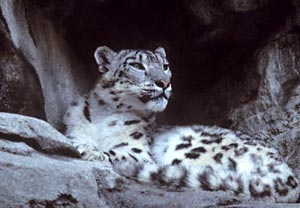
The mountain forests in India are home to a rich variety of flora and fauna and a total of 28 threatened species are confined (as breeding birds) to this region. Out of these, six species are relatively widespread in distribution. The rest of 22 inhabit one of the region`s six Endemic Bird Areas like the Western Himalayas, Eastern Himalayas, Shanxi Mountains, Central Sichuan Mountains, West Sichuan Mountains and Yunnan Mountains. All these 28 species are considered as Vulnerable and the species named White-Browed Nuthatch is considered as Endangered. Apart from these, the Himalayan Quail that has not been seen for over a century and may be extinct is considered as Critically Endangered.

Snow leopard The natural vegetation in the mountain forests in India is highly influenced by climate and elevation. In the Middle Himalayas at elevations between 1520 and 3660 m, the natural vegetation consists of several species of Pine, Oak, Rhododendron, Poplar, Walnut, and Larch. The forests located below the timber line contain valuable species like Spruce, Fir, Cypress, Juniper, and Birch. On the other hand, Alpine vegetation occupies the higher parts of the Great Himalayas, just below the snow line, and this includes the Shrubs, Rhododendrons, Mosses, Lichens, and Wildflowers like Blue Poppies and Edelweiss.

The mountain forests in India once used to provide natural habitat to a large number of animal species like Tigers, Leopards, Rhinoceroses, and many varieties of Deer. However, most of these species are extinct to this region mainly because of deforestation. These important animal species have been restricted to special protected areas like the Jaldapara and Kaziranga sanctuaries in India, at present. The forests located in the Middle Himalayas provide habitat to only a few animal species, as most of the species have been destroyed for deforestation. In the forests located in Great Himalayas, the animal species like Musk Deer, Wild Goats, Sheep, Wolves, and Snow Leopards are most commonly found. All the mountain forests in India are playing an all important role in the fresh water cycle of the country.